
I have fun comparing radios. I have some “reference” stations like CFRX in Toronto, WWV and CHU that I like to use. I band scan on MW and FM at midday and count the number of stations received. It’s not rigorous and sometimes results aren’t repeatable, particularly on shortwave.
My AI friend 🤖 linked to a video about using a signal generator to test radio sensitivity. It was mostly a review of the signal generator pictured below, and the video wasn’t terribly insightful, but it did set me to thinking about how I test radios and how at the end of so many comparison posts I don’t reach a conclusion. I’m plagued by varying signal levels and background noise.
I have a big comparison in the works between a modern and some older analog PLL radios, and it could really use some help. So enter:
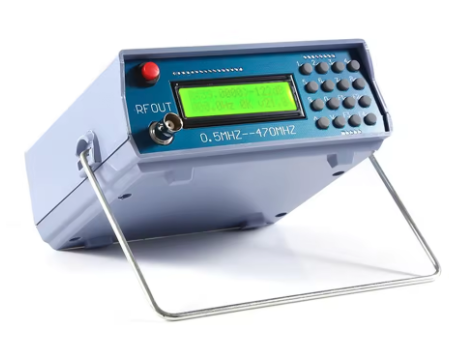
Prices for the pictured generator vary all over the map. I found one for $52.42 + shipping from AliExpress. I don’t have a model or manufacturer for it.
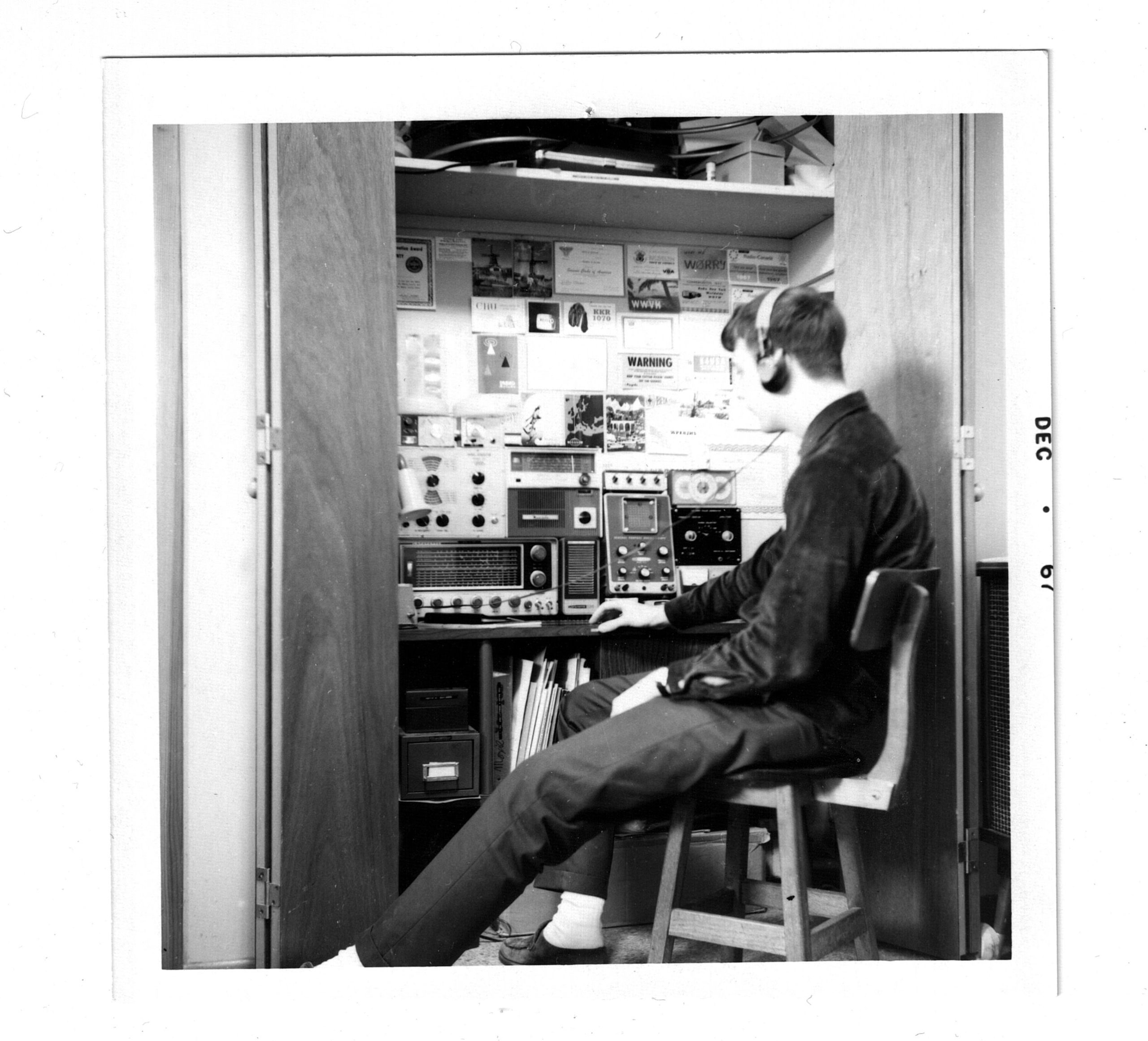
Of course I already have a signal generator, an Eico 324 I built from a kit around 1967. It uses 2 tubes, has very rough frequency calibration (higher frequencies relying on harmonics) and uncalibrated attenuation. It’s essentially designed for signal tracing, not measurement.
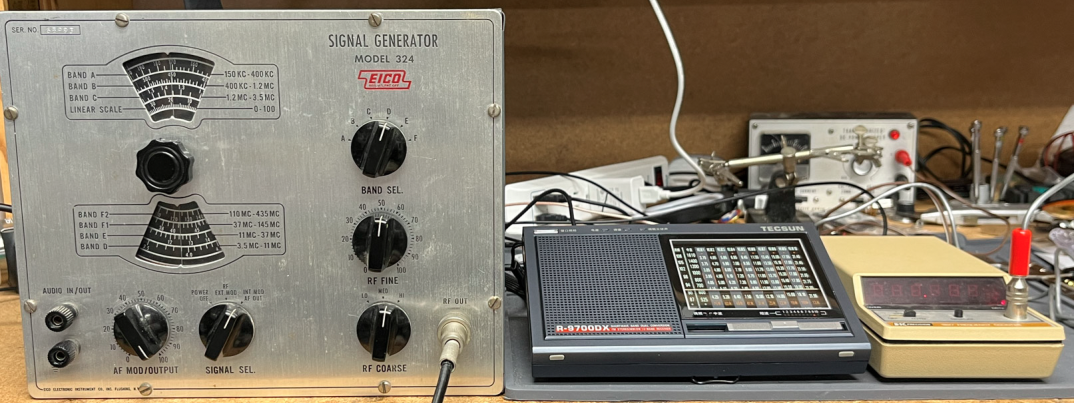
Here’s a more recent photo of the EICO 324 and a frequency counter testing the dial accuracy of my Tecsun R-9700DX (not very accurate).
The incoming RF generator can generate frequencies between 0.5M and 470MHz, and the output level is ‑70 to 132 dBm, sufficiently low I think to challenge my portable receivers. It’s digital, so I won’t need the aging frequency counter.
There are still variables to overcome, particularly antenna impedance. The generator output is a BNC connector, and my radios use 3.5mm audio, BNC, SMA and antenna clip on connections. I don’t have a manual yet.