
Now that I’ve started using the Si4732 ESP32 ATS V3, I’ve been disappointed. The technology is amazing, features overwhelming and the operation is close to optimum for a device with just an off-on switch and a knob. But to be a good radio, it has to get stations, and I wasn’t getting much on it when I tested radios for my Little Radio Review. So what’s going on?
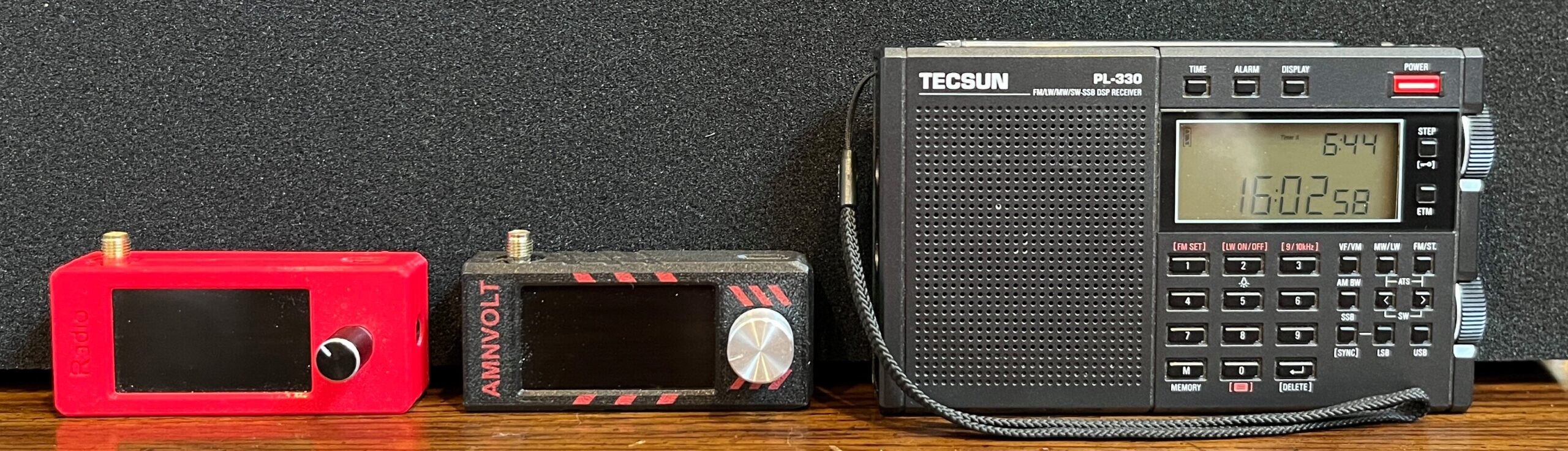
I have two ATS Mini radios. The first one was described on the product sheet as a “Mini Radio” and based on its hardware description is what is described as V1. The second one is described in its documentation as an ATS Mini and its hardware description points to it being V3, with the significant differences being that V3 has an adjustment to the antenna impedance that’s supposed to make it more sensitive and it has a separate amplifier for the audio output jack making it usable for headphones.
One of the most prominent experts on these radios is an amateur radio operator, Paul (OM0ET), who posts videos about radio topics on YouTube and in particular has modified the ATS Mini. Here is his early review of the V1 model:
A list of good things about the radio appears in the video description, including: “Sensitivity comparable with PL330.” Now that is a statement that I can objectively evaluate, since I have a Tecsun PL-330.
More recently some of the hardware modifications Paul made to his own radio have been implemented in the V3 receiver by its manufacturer. He talks about those in this video (although he calls it Ver. 2):
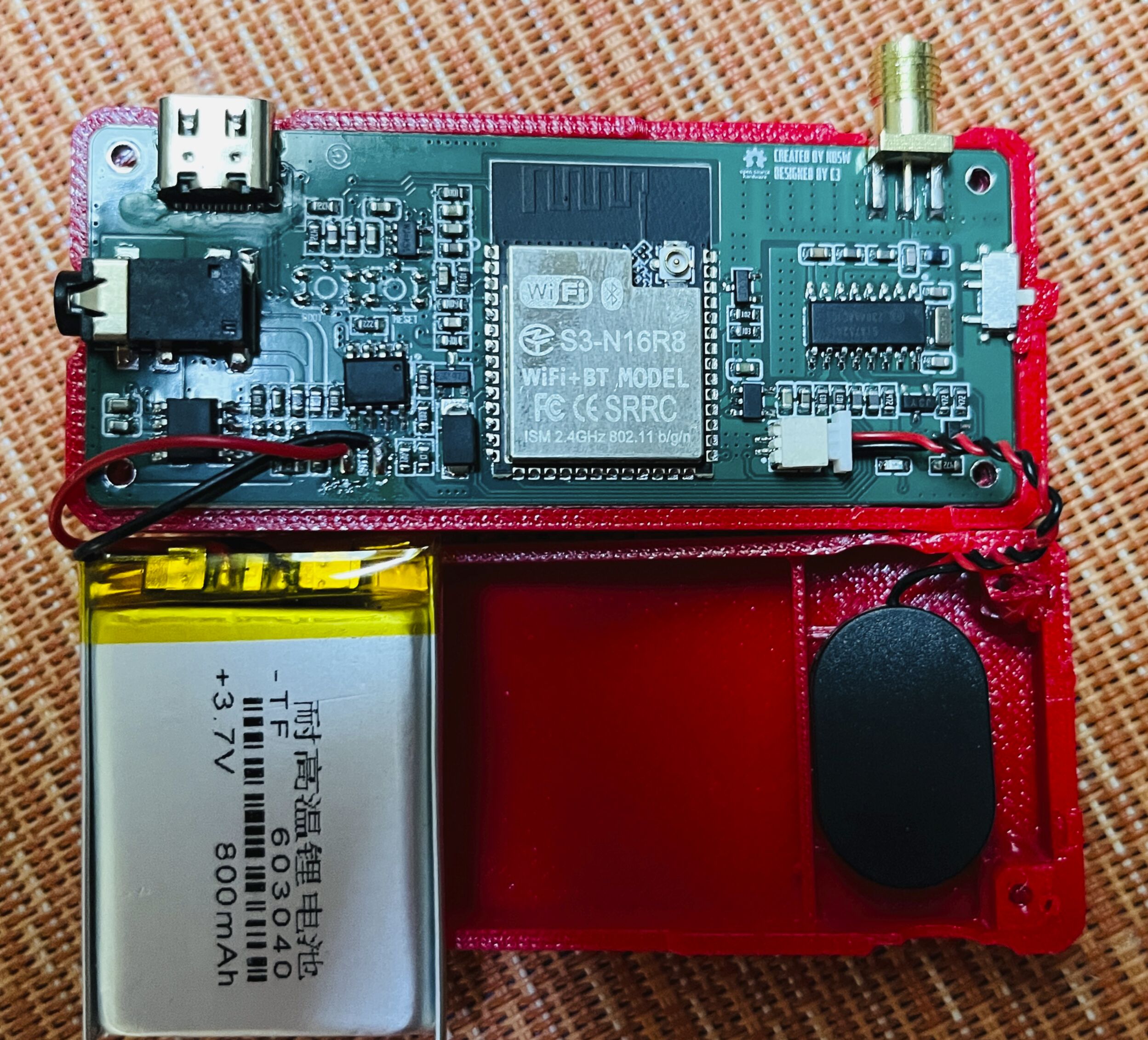
Here is my V1 circuit board. The Si4732 chip is on the right side midway down, right next to the power switch. The large chip in the center contains the Bluetooth/Wi-Fi and the computer.
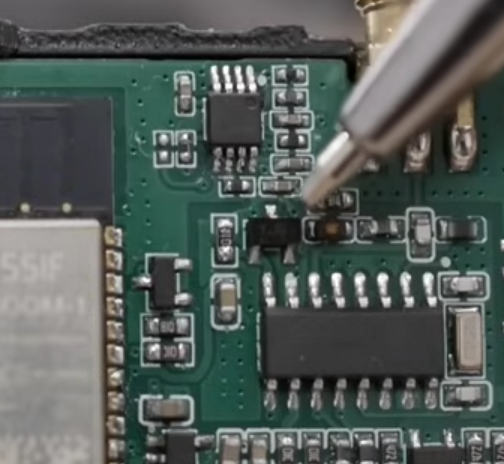
The OM0ET video points to the component added for the Hi-Z mod.
And here it is on my new board, added item circled:
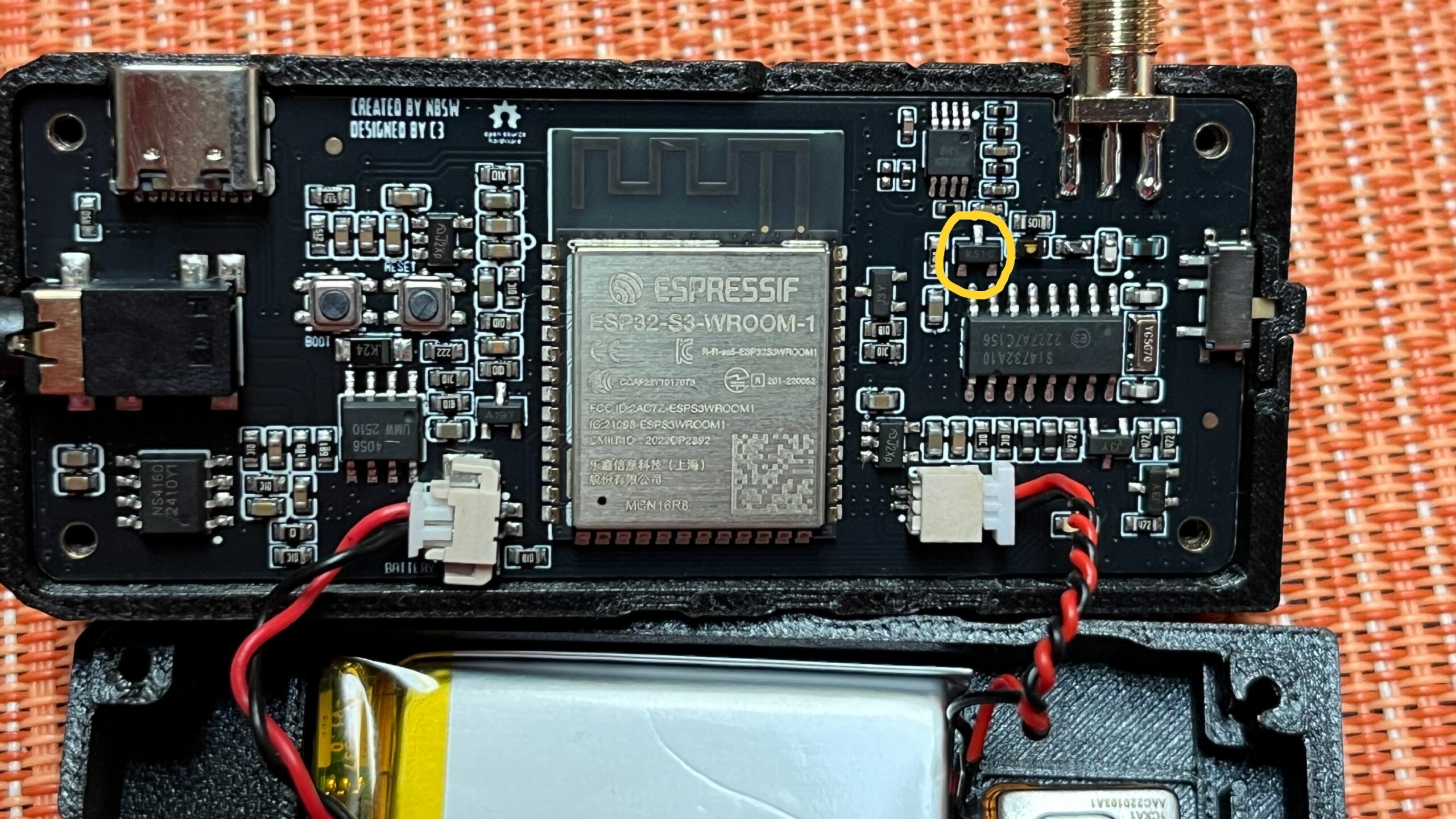
This indicates that I definitely have the V3 radio. The new audio amplifier is on the board above and to the left of the Hi-Z mod.
Ground Rules for Testing
Because shortwave signals can change moment to moment, I think fast switching is vital when making serious comparisons. That’s why I’ll be using A/B switches to rapidly go between radios.
For Round 1, I’m using an MLA-30+ loop antenna, in this case an antenna switch is used to switch the signal. Because the speaker of the ATS Mini is so small, I’m using an external speaker (Sony SRS-XB20) and an A/B switch on both radios. First I compare V1 with V3, and then compare V3 with the PL-330. Both Mini radios were running the same firmware version. 2.27, which is the latest as of this writing and had the same AGC setting (ON), the same AVC setting (48) and the same volume setting. By comparing the two Mini versions, I can tell if perhaps I received a defective one, explaining the poor reception.
For Round 2, I’m swapping out the MLA-30+ with a telescopic antenna. The PL-330 is at a slight disadvantage because it’s telescopic antenna is shorter and I’m only comparing the V3 with the PL-330.
Round 3 substitutes my world renowned 2o-foot wire up a tree antenna (WUT). The purpose here is to see how the V3 compares with a higher-impedance antenna. The text repeats the comparison between the ATS Mini V3 and the PL-330. This should be interesting because it roughly duplicates the conditions of the Little Radios review, only with a slightly shorter antenna.
🤖Impedance Comparison: Long Wire vs. Telescopic Antenna
| Antenna Type | Approx. Length | Typical Feedpoint Impedance (Receive Mode) | Notes |
|---|---|---|---|
| Telescopic Whip | ~2–3 ft | 30–150 Ω | Often matched well to portable radios; low-Z |
| Telescopic Whip | ~4–5 ft | 100–300 Ω | Still relatively low-Z; varies with frequency |
| Long Wire (20 ft) | 20 ft | 300–800 Ω | Acts as a short random wire below ~10 MHz |
| Long Wire (100 ft) | 100 ft | 600–3000 Ω+ | High-Z, especially off-resonance; varies wildly with frequency and height |
Round 3 also substitutes the Evche EC-2110BTS radio for the Sony speaker — just because.
The Results
Round 1
In Round 1 I found no discernable difference between V1 and V3 radios. This was with the MLA-30+ antenna on WWV, 15 MHz. Since the MLA-30+ has an impedance around 50 ohms, it makes sense that an integrated Hi-Z mod wouldn’t make any difference. From this I conclude that my V3 is not defective.
In the second video I compare the ATS Mini V3 to the Tecsun PL-330 with the same WWV signal. What I found was that indeed the sensitivity of the ATS Mini is comparable to that of the PL-330, at least in the same ballpark.
Round 2
In Round 2 the ATS Mini V3 was compared to the PL-330 with a relatively strong shortwave broadcast on 9330 kHz. Again, the Sony external speaker was used.
Round 2 continued with a very weak station, WRMI on 9395 kHz.
It was mostly inaudible, but occasionally the spectral voice of Bro. Stair slipped through, about the same on both radios.
Round 3
So how did the ATS Mini compare with the PL-330 with an external higher impedance antenna? To save the reader time, the two radios were comparable in sensitivity. The variable is the volume control setting.
Why the Disparity with Earlier Tests?
My current hypothesis is that the difference is in audio output. My Little Radio Review was conducted using the internal speaker of all the radios tested, and the ATS Mini has a very low quality, tinny-sounding speaker without much volume. In this new series, everything was done with an auxiliary speaker.
The v4 ATSmini is out, many improvements, and the same guy has published a review on YouTube.
Thanks for that comparison, especially regarding the antenna situation.
However, I’d like to point out that the input of the Si4732 is not a 50‑ohm termination for any antenna or feed line as you would find on a professional communication receiver. Instead, it is designed as a high‑impedance input, especially intended to work in conjunction with a capacitive probe and not with a long wire antenna.
Short whips connected directly to the SMA socket are not resonant antennas at frequencies below 30MHz; rather, they act as capacitive probes with approximately 15 pF to ground. In effect, this creates a “portable active antenna” for E‑field reception.
If an external low-impedance 50‑ohm source needs to be used, a matching network (at minimum a 50‑ohm resistor or an attenuator) is required to avoid resonant effects at the missmatched feedline, and other issues.
It should also be noted that the JFET impedance converter introduced in hardware Version 3 of the Mini RX does not change this situation; in fact, it can even exacerbate the mismatch.
And one more note for experimenters: The Input of the Si4732 has no high-voltage / ESD protection and is likely prone to static electricity etc.
Believe me … I lost one of this ICs when experimenting.