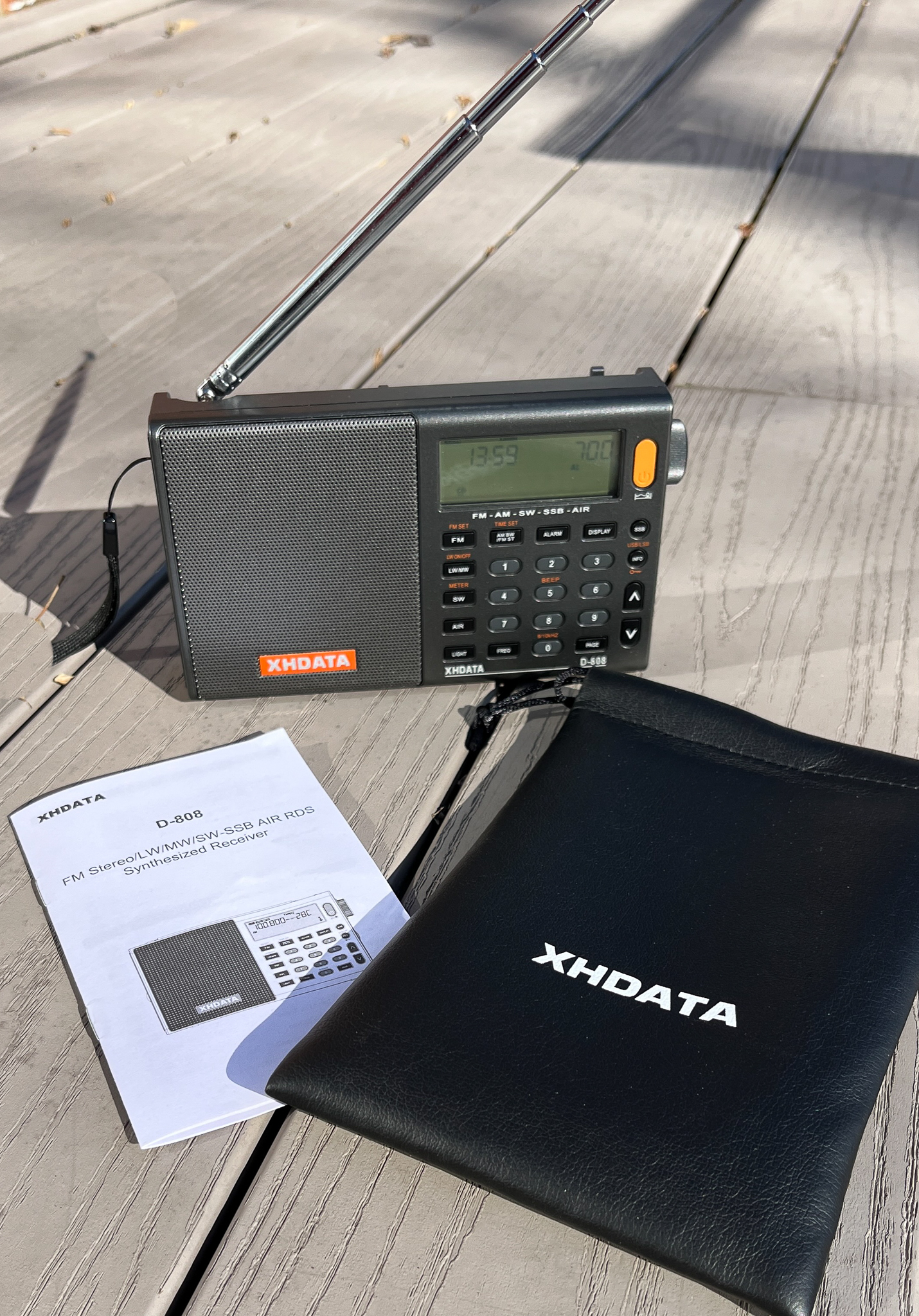
The XHDATA D-808 arrived yesterday afternoon. My first impression, just fondling the radio, was good. It was solid and the materials seemed better than average quality. After some time using the radio, I was less impressed. I detail below how the radio has excellent performance as a radio, but that its operation and documentation are poor.
Upgrade
It appears some changes have been made since the XHDATA D-808 was initially announced in 2018. In 2021 the display back light was changed from white to amber. Other users have experienced the antenna coming loose from the circuit board, which apparently was the only anchor point for the antenna. Now there is a screw through the back of the case that holds the antenna more securely. (For details on the difference between old and new models, refer to this XHDATA document.)
Downgrade?
More recently (2023?) the internal circuit of the of the radio was radically changed and users are reporting that the new version isn’t as loud. This version can be identified by rubber feet on the bottom and a USB-C charging connector (the prior version has a USB Micro). Others are speculating about poorer performance. I’ll post an update when I know more. Mine is this latest version. You can read more about the update on the Ultralight User Group.
Operation
I compared the XHDATA D-808 to my other $70+ radios: Tecsun PL-660, Tecsun PL-330, Sangean ATS-405, and Eton Executive Elite. Every one of them had the volume control on the lower right side of the radio except the XHDATA that has a fine tuning control there: drives me nuts trying to compare radios by turning down the volume on one and up on the other.
Continue reading