
Checking Out the Unbranded Signal Generator

I am happy to report that the signal general generator does work (turns on and outputs RF), despite all the YouTube repair videos.

My first experiment was to hook up the Signal Generator to an SDR, the RTL-SDR Blog V4, controlled by SDR++. I more or less randomly picked 17 MHz for the frequency.

Signal Generator — 17 MHz

I pressed the F1 button until the “<” sign appeared on the top row. In the preceding photo it’s after “017.0000.” It points to the parameter being set, in this case the frequency. To directly enter this frequency requires keying all 7 digits, “0170000.” Once you start keying a number, you must finish before going on. When the 7th digit is keyed, the frequency changes.

The number on the upper right is the signal strength in dB. The number lower left is a subcarrier tone frequency used by some devices (turned off here). The middle bottom number is the modulation frequency (0 for no modulation), and finally on the bottom right is what looks like a firmware version that hasn’t changed for a couple of years at least.

Here’s what the signal looks like on the SDR++ display.

SDR++ screenshot (click to expand)

When I take the generator setting of -71 dB and add the gain setting on SDR++, the result is -37.2, which is pretty close to what SDR++ shows using the scale on the left.

This generator only does FM modulation, narrow band FM in particular. That’s not my target use, testing portable shortwave radios, but AM radios do attempt to decode signals of all types, and a pure tone FM signal is detected, sort of. I heard a “warbling” tone when I set SDR++ to AM, and a similar sound from the Qodosen DX-286.
Posted in Radio | Tagged , , | Leave a comment

First Impressions: Unbranded Signal Generator

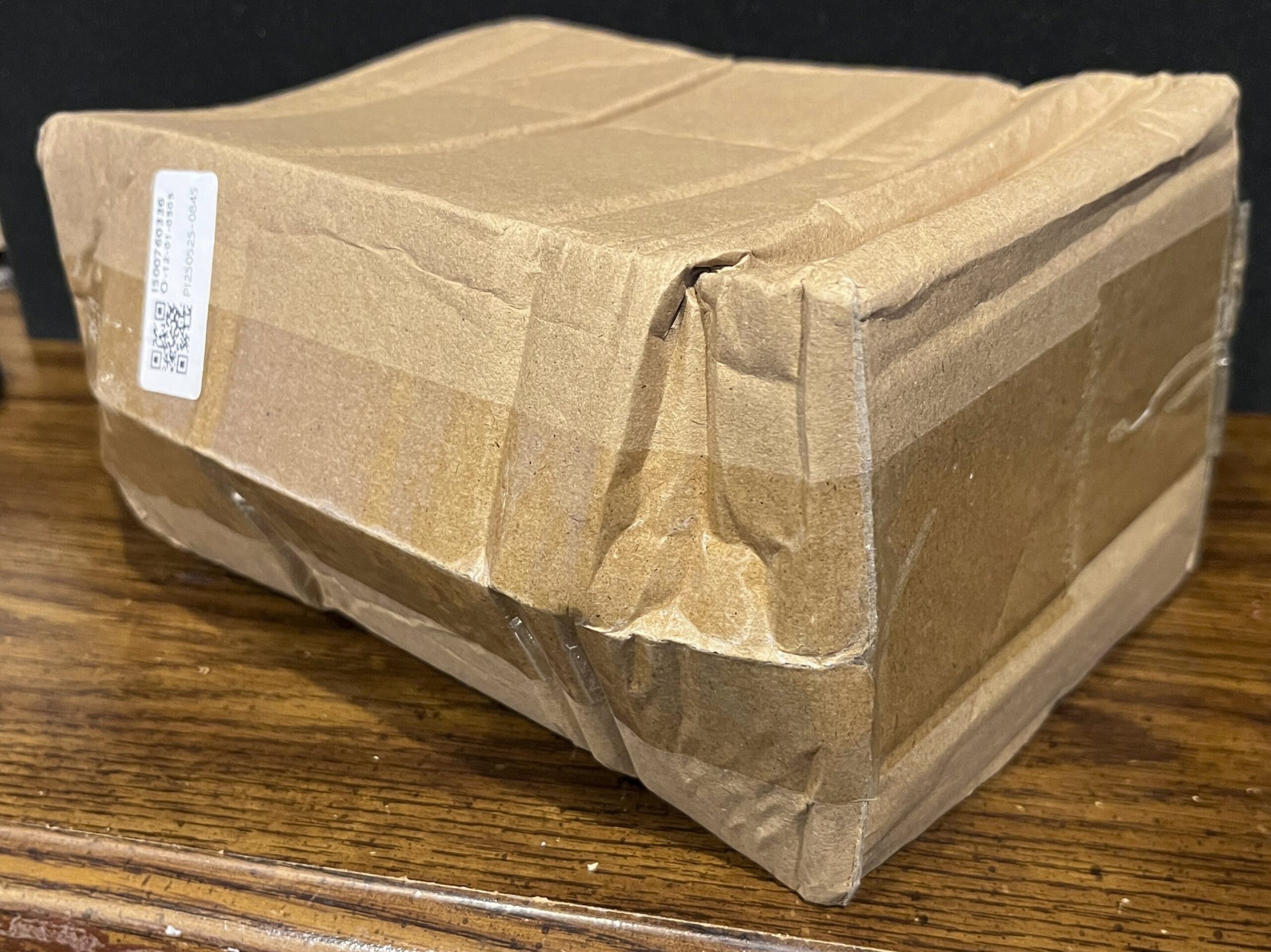
The good news is that it arrived early from AliExpress. It arrived in a gray plastic bag, enclosing a shipping box that I will not be reusing.

Crumpled Box

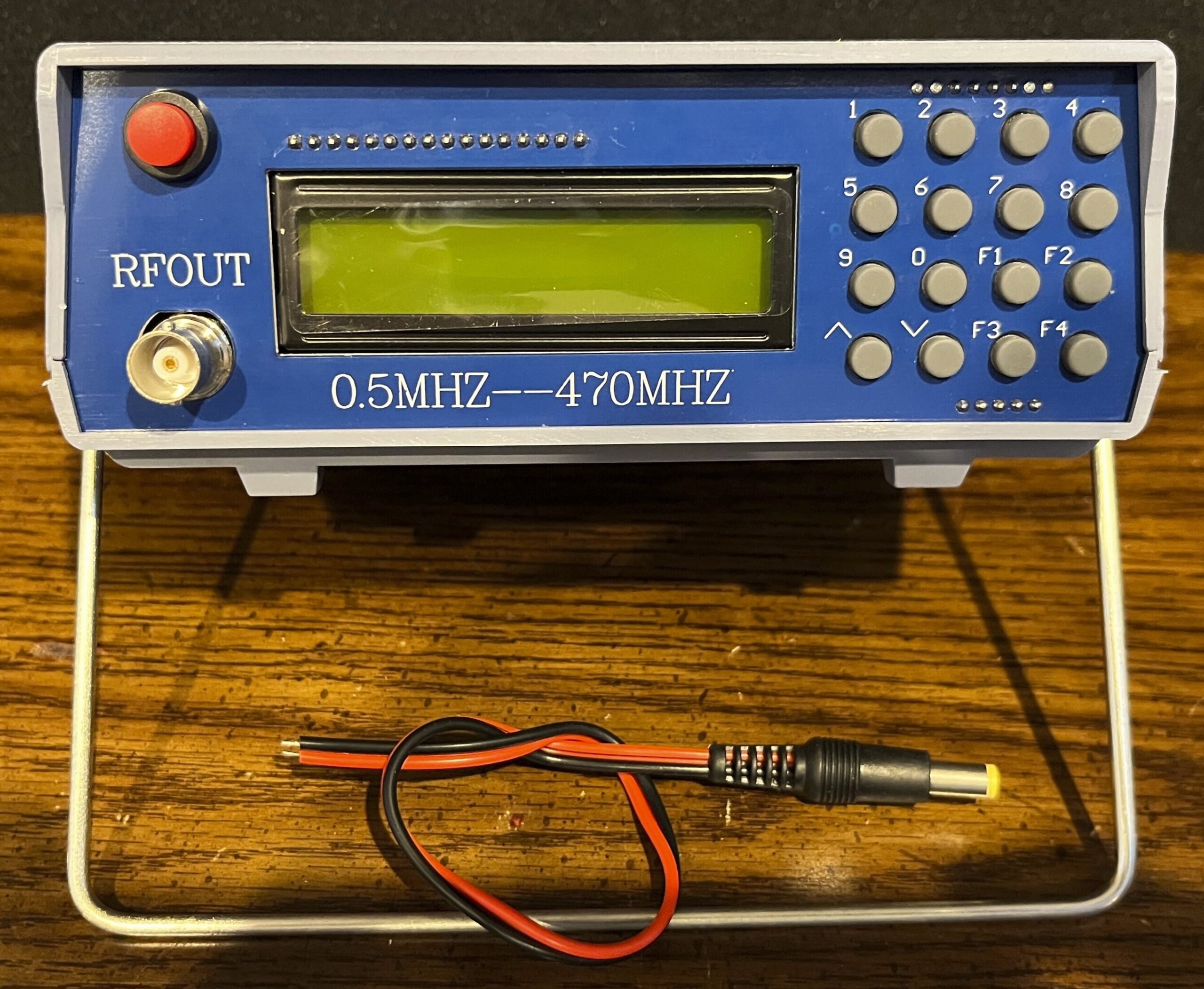
The bubble-wrapped contents fared better:

And that was it. The power cable had a connector only on one end.

Continue reading
Posted in Radio | Tagged , | Leave a comment

Setting Multi-Zone Radio Clocks

The Problem

I have 4, perhaps more, radios that have a capability to display both local time and UTC. They are: Eton Elite Executive, Qodosen DX-286/SR-286 and Sangean ATS-909. I don’t understand the setting process fully, and the manual didn’t help.

Let me say at the outset that the User Manual clearly shows how to initially set up the Qodosen SR-286/DX-286 radios. And if it isn’t clear enough, I wrote up the steps in my own words. That works; what I haven’t figured out is how to adjust the time without repeating the same rather lengthy procedure.

I remember back when I got my Eton Elite Executive, I couldn’t figure the time zone out. I just set the clock for whatever it displayed and stayed on UTC. Now with my latest acquisition, the Sangean ATS-909, it’s the same problem. I read the manual. I consulted an AI. When nothing worked I said “enough!” I am going to figure this out on my own.

The 3 types of radios are presented in the order of their introduction into the marketplace, perhaps to show some hints of evolution.

Continue reading
Posted in Radio | Tagged , , , , , | Leave a comment

The Sounds of Static

Hello darkness, my old friend.
I’ve come DXing you again.
Because a signal softly creeping
With the signal strength increasing,
And the image on the screen of my SDR,
From afar,
Emerging from the wells of static.

With apology to Simon and Grundig

With a little help from the OfficialSWLChannel YouTube chat members.

Posted in Music, Radio | Tagged | Leave a comment

PLL Progress

I have an ongoing project to compare some PLL Superhet radios I have, a Grundig G4000A, Kaito KA-1101, Sangean ATS-909, Tecsun PL-660 and Tecsun PL-990. I’ve had some bad luck with my last TWO visits to the park, interrupted by lawn mowing. Things are moving slowly, but I am collecting impressions.

I went out on the patio about 14:05 UTC (10:05 AM EDT) here in Palmyra, Virginia, with the purpose of comparing the group. I typically start any comparison process like this by doing a quick band scan with my Qodosen DX-286 because I want to see what’s on the air before getting all the radios out to test. I use that radio because its scans are fast, sensitive and accurate.

Continue reading
Posted in Radio | Tagged , , , , , , , , | Leave a comment

Radio Ghosts and Other Things that Go Beep in the Night

Images

My first shortwave radio was a Nanaola 10NT504, a receiver that uses superheterodyne technology. In that mode, a radio is tuned by mixing the incoming radio signal with a locally generated variable frequency carrier signal (from a variable frequency oscillator or VFO) in a “mixer” stage, producing two output signals equal to the sum and the difference of the two originals. Those are passed on to a filter tuned to one fixed frequency (often 455 kHz) called the intermediate frequency, which is then amplified, demodulated into audio, amplified again, and sent to a speaker. The VFO signal can be on the high side or the low side of the incoming signal, but in most radios it is on the high side, or 455 kHz + the desired frequency for receiving.

Continue reading
Posted in Radio | Tagged , , , , , , , , | Leave a comment

Si4732 ATS Mini Firmware 2.30

This is an update to my 2.28 installation post: ESP32 – Si4732 ATS Mini: Firmware Upgrade 2.28 (Updated).

There’s a bit of a wrinkle with this installation that I didn’t have before. The method of storing settings has changed, which basically means that you lose your settings, including Wi-Fi credentials, after the update. Further, the radio will not boot automatically on power up the first time.

After completing the standard update (see my article linked above), power the radio off then while holding down the encoder wheel, turn it back on. This time you’ll see a message that the settings are being reset. Then release the wheel.

I’ve applied the update both to my V1, V3 and V3S radios.

For details on the changes in firmware 2.30, check out the release notes on GitHub.

Posted in Radio | Tagged | 8 Comments