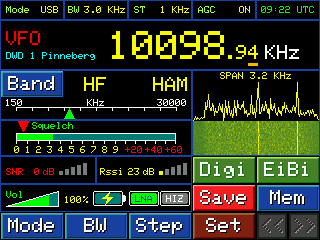
This is just quick note about some new commercial firmware for the ATS25 series of receivers. I hope to take a look at it soon, but in the meantime interested owners of these radios can take advantage of a free trial look through a link on their website, https://golden-radio.com.
ATs25 with Golden Radio Firmware
According to the website, it’s tested on:
ATS25, ATS25+, X1, X2, max, max-Decoder, max-Decoder II and variants with digital-modes modifications. ESP32 + SI473x hardware with ILI9341 display.
I refer the reader to the website for a full list of features, but I noticed EiBi database and FT2 support right away.
I don’t do much with my ATS25 max-Decoder — just too many radios and so little time — but this does look intresting.
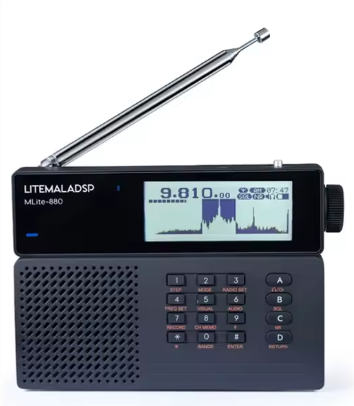
I received a note today from Elecevolve, the manufacturer of the MLite-880, offering a review unit. Nearly all the radios I review are ones I purchase outright, but this will be one of those rare exception.
MLite-880 (product photo)
The MLite-880 was not on my buy list for a couple of reasons. I was little put off by its appearance and particularly the black and white screen, where color is the norm for SDRs. I had decided that if I were going to pursue the portable SDR genre, then I wouldn’t compromise, deciding to get a top-of-the line Mahahit DSP4 when they become available (rather than the discontinued DSP2, DSP3, whatever Deepelec may come up with next, or a clone).
Most of my reviews are written within 3-4 days of receiving the radio. While I try to give the receivers a workout, cover the main points and present a case for or against, opinions change over time; some radios even get firmware updates.
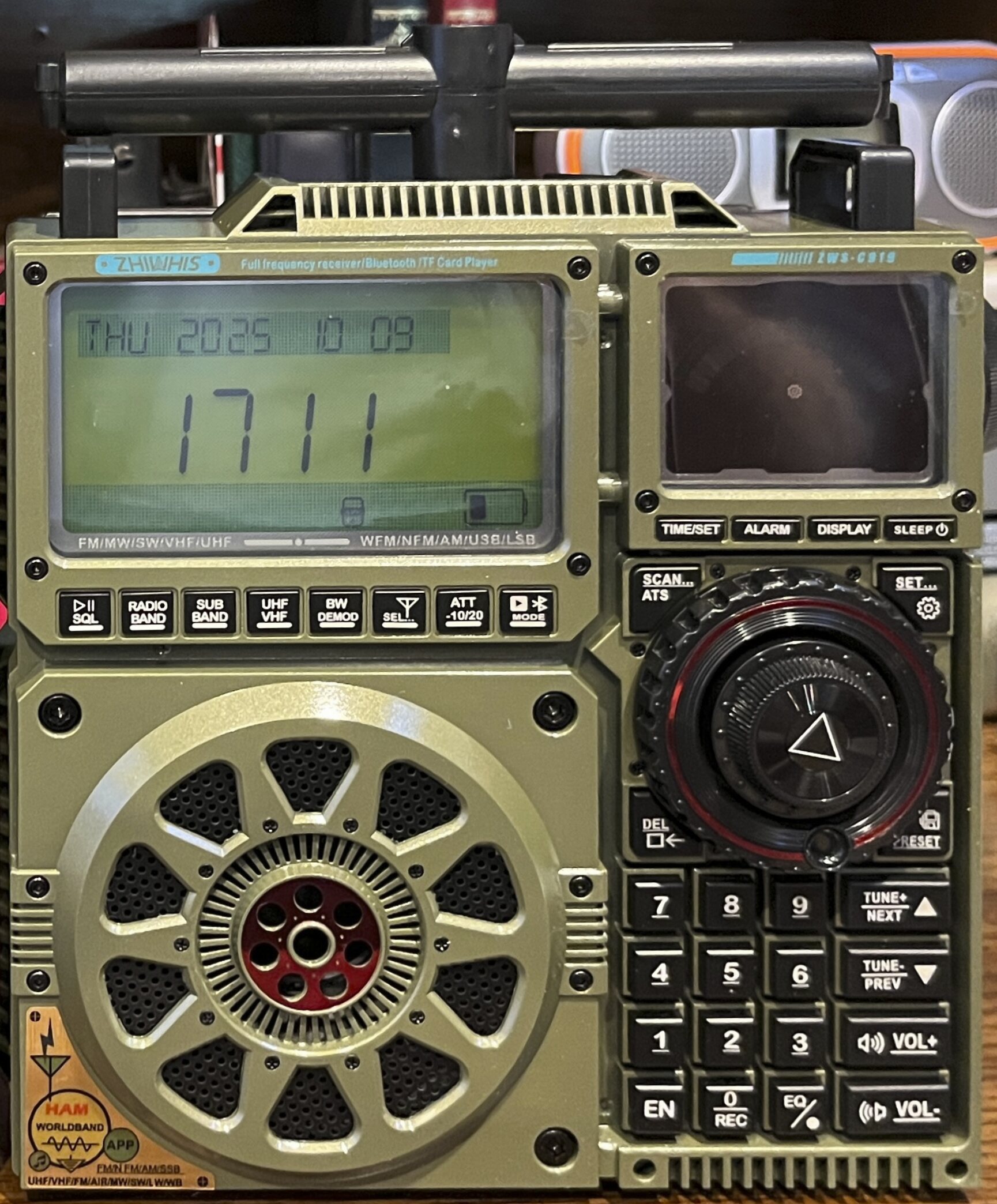
The receiver that initially spurred this series is the Zhiwhis ZWS-C919 / Raddy RF919 / Retekess TR113 / HanRongDa HRD-C919. I wanted to re-think this one because my first opinion was so negative, and other reviewers are more positive.
Most of my reviews are written within 3-4 days of receiving the radio. While I try to give the receivers a workout, cover the main points and present a case for or against, opinions change over time; some radios even get firmware updates.
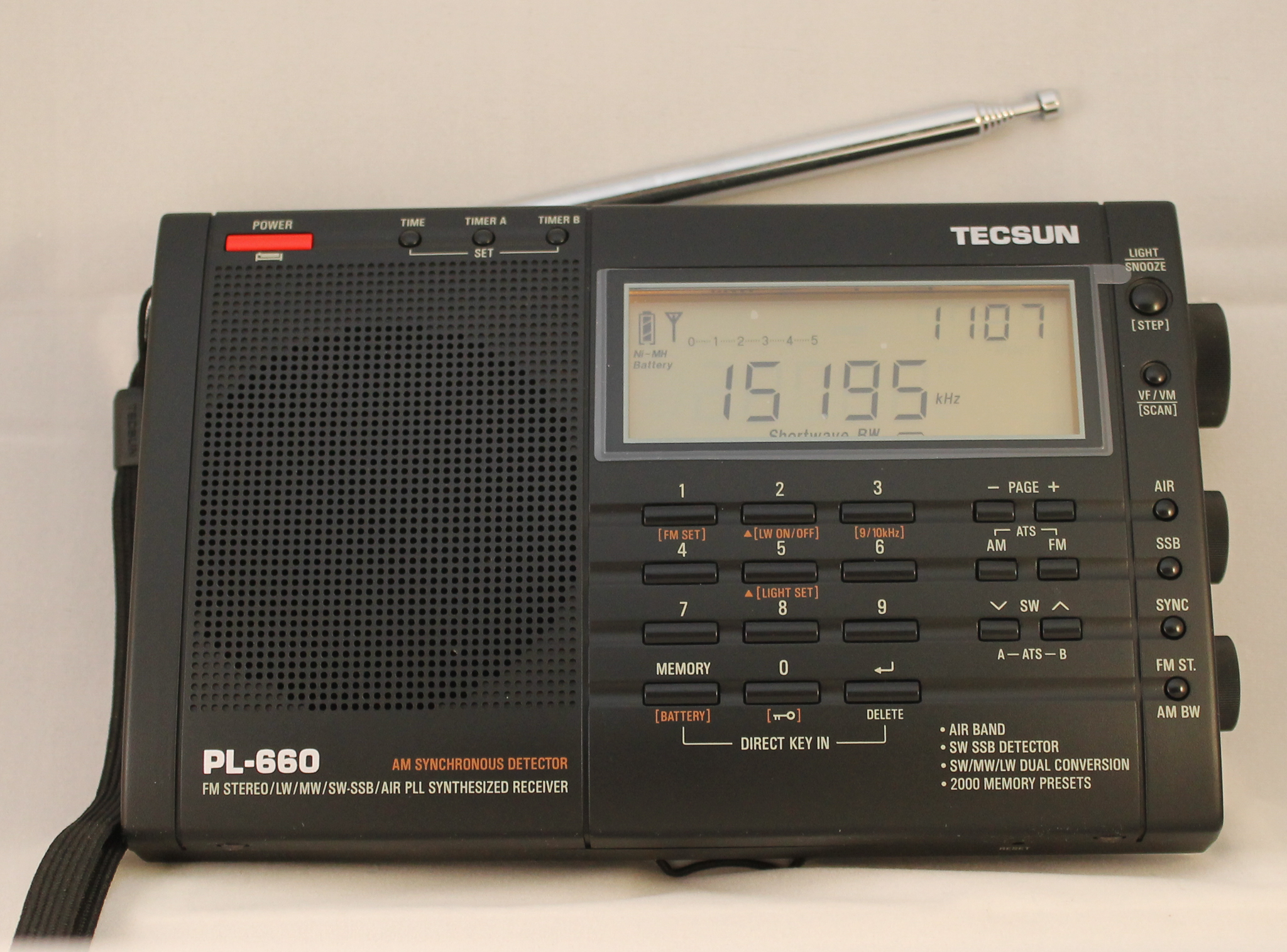
I bought my Tecsun PL-660 14 years ago for $109 and it still has the screen protector attached. It’s an early firmware version, 6601.1 Later ones have memory sort with duplicate removal and a tuning calibration feature.
The title stretches the concept of “Incoming.” My order just put me on the waiting list, with no money changing hands.
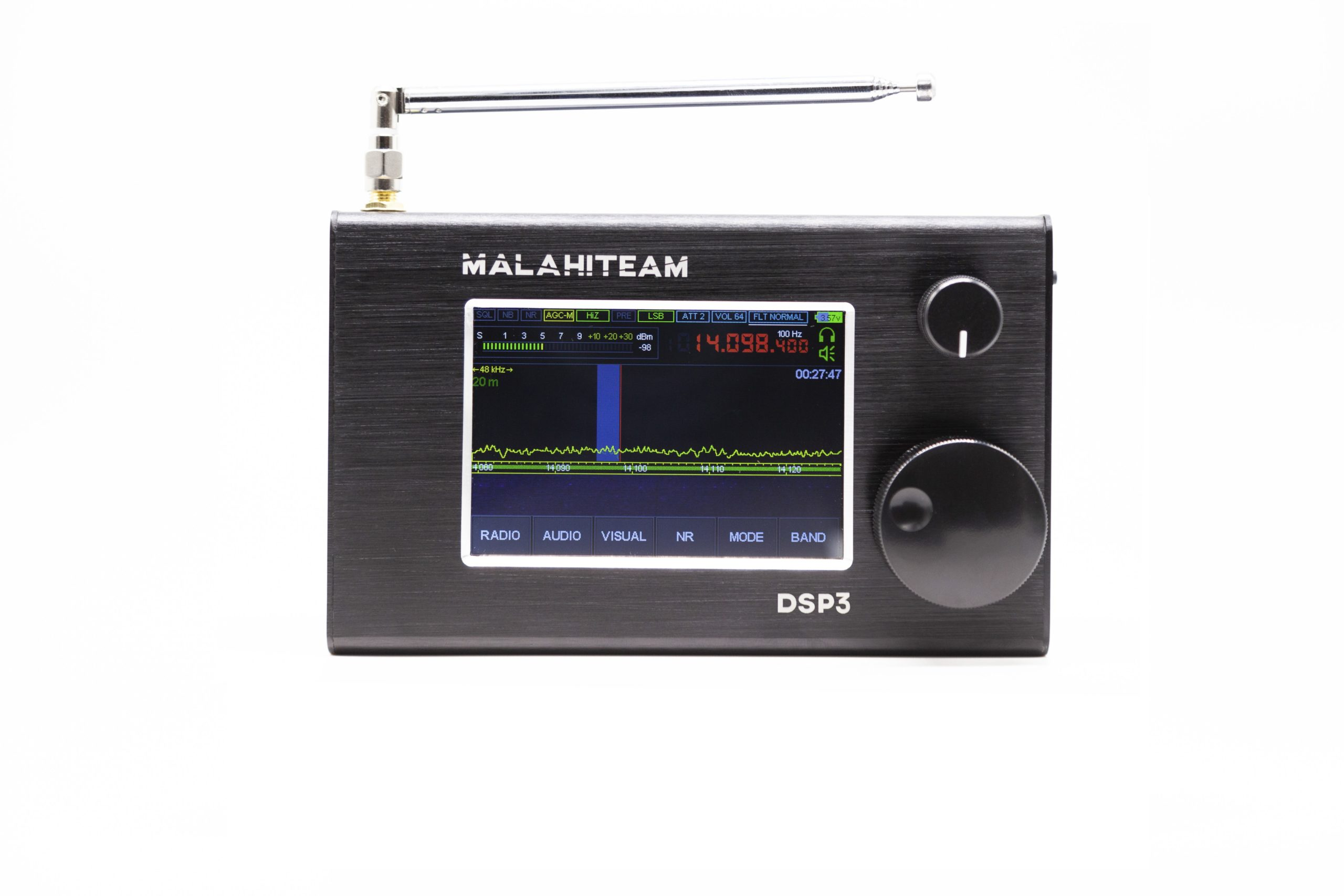
It’s supposed to be the same size as their DSP3, which is now discontinued, something like 120 x 80 x 32 mm.
MALAHITEAM DSP3 (click to expand)
The price for the DSP4 is 25,900 ₽ or $312 USD, plus shipping and maybe import fees. That would be the second highest price I’ve paid for a radio (the highest my Realistic DX-300 I bought in 1979 that would be around $1,000 in 2026 dollars). Still it’s promised to be a significant advancement over the DSP3, more over the clones, and a monumental improvement over the DX-300.
The model has the following features, differences and similarities with Malachite-DSP3:
The DSP4 has a higher bandwidth – 650 kHz instead of 192 kHz in DSP3;
The dimensions of the body and the placement of controls are completely identical;
The power supply circuit is completely identical – DSP4 is also powered by one or two 18650 elements connected in parallel;
The dynamic range for blocking is significantly higher than that of DSP3 – at least 100 dB for DSP4 compared to 85 dB for DSP3;
The IQ signal transmission bandwidth of DSP4 is slightly lower than that of DSP3 – 162 kHz for DSP4 instead of 192 kHz for DSP3;
DSP4’s power consumption is 1.5-2 times higher than DSP3’s, depending on the operating mode. It’s worth noting that DSP3 (yes, DSP3) is a low-power receiver, and few compare favorably to it.
DSP4 significantly improves RDS reception from FM radio stations;
The DSP4’s received frequency band is somewhat narrower – from 100 kHz to 1.7 GHz, but it is continuous and does not contain “holes” like the DSP3’s;
The sensitivity of DSP4 is better than that of DSP3 – no worse than minus 140 dBm on the HF range, the sensitivity on VHF is noticeably better than that of DSP3, in some VHF ranges it is about minus 140 dBm;
DSP4 has a built-in clock chip and Bluetooth module;
The rest of the functionality is the same as DSP1-3, the quality of DSP processing remains just as high;
The radio receiving solution of DSP4 is more advanced and sophisticated.
Shipping estimated for the end of May. That assumes that there will be a mechanism to pay for it, given the restrictions on trade between the US and Russia.
I planned to do some testing of my top-of-the line Zhiwhis ZWS-C919 and discovered that FM stopped working. I tried the usual reset steps to no avail. Other bands worked, but FM was dead silent. I bought the radio in October of 2025, so it’s still under the 12 month manufacturer warranty.
Around noon today, February 27, 2026, I sent Zhiwhis an email:
Subject: Warranty Support
I purchased your ZWS-C919 through Amazon.com on October 6, 2025 (Order *************) and have used it occasionally. Today I found that the FM band is no longer working; when the FM band is selected there is no sound at all. AM, SW, Weather and CB have sound, but not FM. Here is what I tried:
Tried other bands: worked OK
Verified that the Volume control was set to 30 (and was not flashing)
Tried the RESET under the power-off options
Removed the batteries from the radio for 1 minute and reinstalled
Tried multiple strong FM stations
If the radio is on the FM band when I turn it on, then signal strength graph is shown on the display but no sound. If I switch to another band and then back FM, there are SNR values shown, but the graph does not move.
Please indicate whether this can be remedied by the user, or provide a replacement.
Note: When the volume is flashing, the radio is muted. On other bands, pressing the >|| button turns mute on and off. On FM the mute button does nothing and the display doesn’t switch to flashing state.
I think the Chinese New Year celebrations are over. I’ll update when something happens.
Update:
Taking the batteries out for almost a whole day didn’t help.
The mute button works on other bands — muting the receiver and flashing the volume display, but on FM it does neither. That rules out a problem with the physical button. The radio is app controlled, so I thought I would try controlling the radio with the app. The >|| button on the app doesn’t do anything for radio on any band; however when that button is pressed on the radio a mute indicator on the app flashes, at least it did at first. Now the radio >||button doesn’t do anything on any band except wake up the display and turn on the backlight.
The C919 has a MicroSD card slot and can record radio. Using the app I was able to tune an FM station, record it, and then play back the recorded sound.
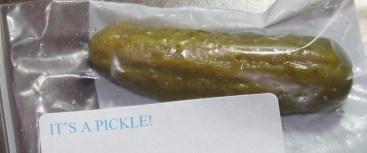
It’s a pickle
I had failed to mention that there was no sound on LW either. After a couple of days, sound on MW stopped too. So LW, MW and FM are now silent. SW, CW and the VHF bands still work.
February 27, 2026 — Initial report to customer service
March 7, 2026 — Still no reply from Zhiwhis. Changed my Amazon review from 2 to 1 star.
March 11, 2026 — Received reply, suggesting I update the firmware. Attached was firmware file for V1.910 and a 38-page manual.
March 11, 2026 — Changed my Amazon review back to 2 stars.
Firmware update
I had considered a firmware update prior to the the failure, but the only update was available from Raddy, not the brand of mine. The Raddy material emphasizes that firmware updates should not be done unless there’s a need to do it (“If it isn’t broken, don’t fix it,” they wrote), because of the risk of bricking the device. But now the radio is broken.
Radio firmware updates usually take one of two paths, either putting the firmware on a Micro USB card and letting the radio find and install it, or a more complex process using an updater on a computer connected to the USB port emulating a serial device. Zhiwhis didn’t tell me how, but Raddy does. Raddy also provided V1.910 release notes:
Optimized Bluetooth connection INT issue.
When headphones are plugged in, “WFM” demodulation mode will be displayed and the heard signal will be mono. Long-pressing the [BW/DEMOD] button to enter demodulation setting and then once more pressing [BW/DEMOD] button to switch to “St”ereo demodulation mode results in stereo sound.
Fixed FLAC card reading issues.
Fixed EQ tone in FM mode now working as expected.
Fixed device freezing and automatic power-off issues.
Fixed issue where the app/phone display wasn’t synchronized with the main unit after long pressing the [SUB BAND] button to enter the free intercom frequency in UHF mode.
Optimized USB screen flickering.
Fixed FM64 tuning issue where the device wouldn’t remember settings after powering off.
Added multiple manual tuning symbols to the AM mode display.
Improved secondary screen misalignment and no sound when using headphones.
This update process uses the card, so I freshly formatted the MicroSD card as FAT32 and copied the ZWS-C919.upd file to it. The update process involves turning the radio on and “playing” the file as if it were a music selection. The radio flashes “00:00” for a second and then “UPd” for a few seconds more. The radio reset to default settings and the version display now shows “1 – 910”.
Is the problem fixed? For now, yes. Now I just have to find the instructions for disabling that Morse code sound every time the device is powered.
I recently bought and reviewed a portable SDR, a no-name clone of a Deepelec Malachite DeepSDR 101. While I didn’t like the radio, I liked the concept. It has the spectrum display where I can see nearby stations and compare signal strength, waterfall display, and high resolution tuning (1 Hz). My review explains how this didn’t work out in practice on the version I bought.
Genuine radios of this genre have firmware updates and improve over time. The one I bought wasn’t genuine; software is primitive, firmware upgrades don’t work, plus the hardware (MCU, RAM, filtering) are bottom of the line, and documentation is sparse.
There are, however, better, legit, licensed portable SDRs that have features like quick access to settings through the touch screen, separate knobs for volume and tuning, noise limiters, working AGC, filtering, firmware upgrades and less overload. When I looked toward buying something better, I had sticker shock, finding radical price inconsistencies, for example two Amazon sellers with one more than double the price of the other.
AI generated content may appear occasionally in articles and will be denoted with the 🤖 [robot emoji] symbol. Content comes most often from Microsoft Copilot, but may also come from Perplexity, ChatGPT, Duck.ai, Grok or Deep Seek.