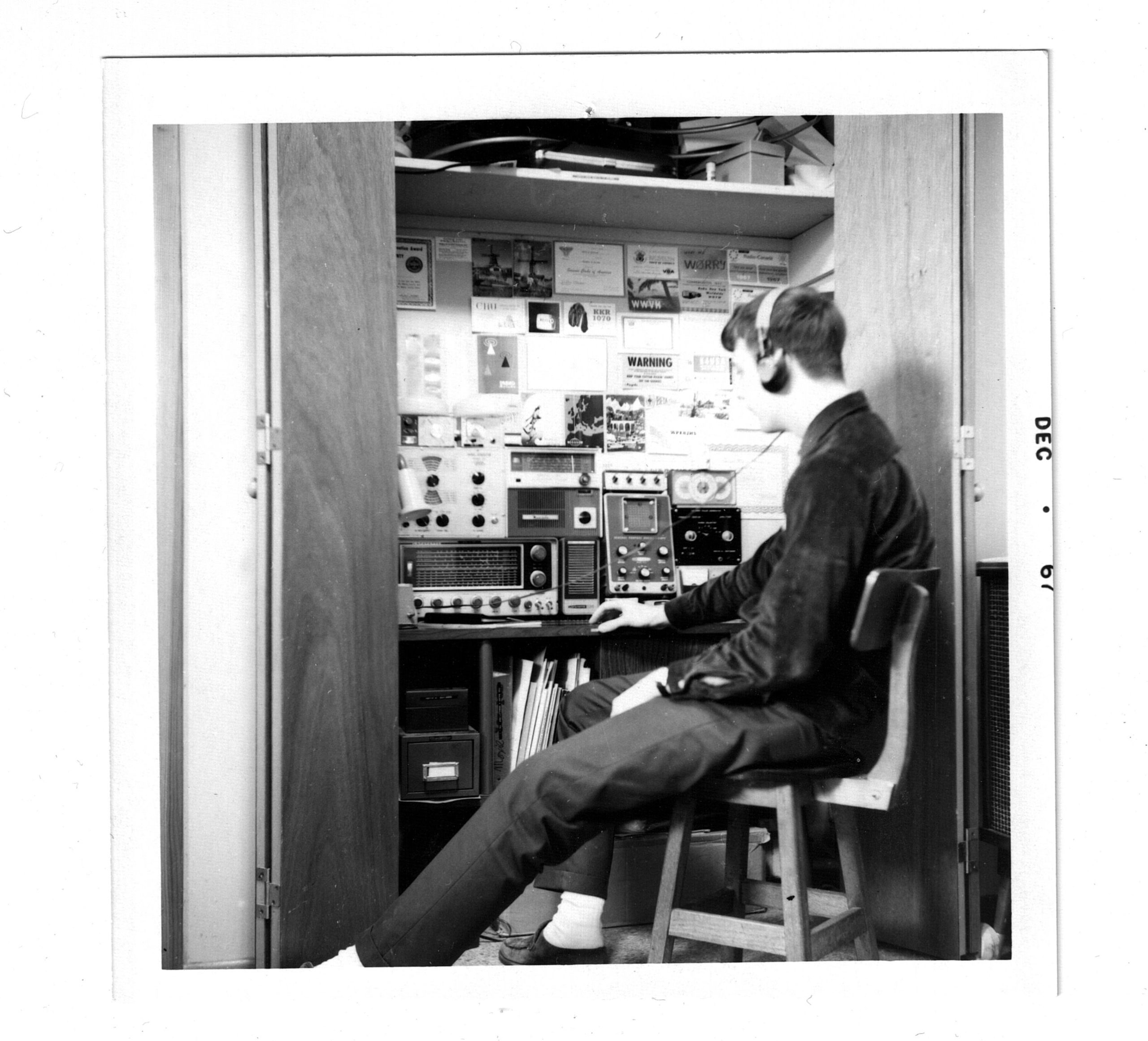
When I was a young shortwave listener 56 years ago, I had a Lafayette KT-340 desktop radio with connectors on the back for an antenna and a ground. I always hooked up my 75-foot long wire to the ANT post and connected the GND post to a water pipe or something. Life was good.
Nowadays, I have many portable radios and, with the exception of my vintage Panasonic RF-085, there aren’t any explicit ground connections. Still, several of my portables have an external antenna jack that take a phone plug with a sleeve and a tip connection (the tip to the antenna and the sleeve theoretically to the ground). One reads online not to bother with a ground on these radios, but I’ve had a different experience sometimes, and in this blog article, I want to describe one of them.
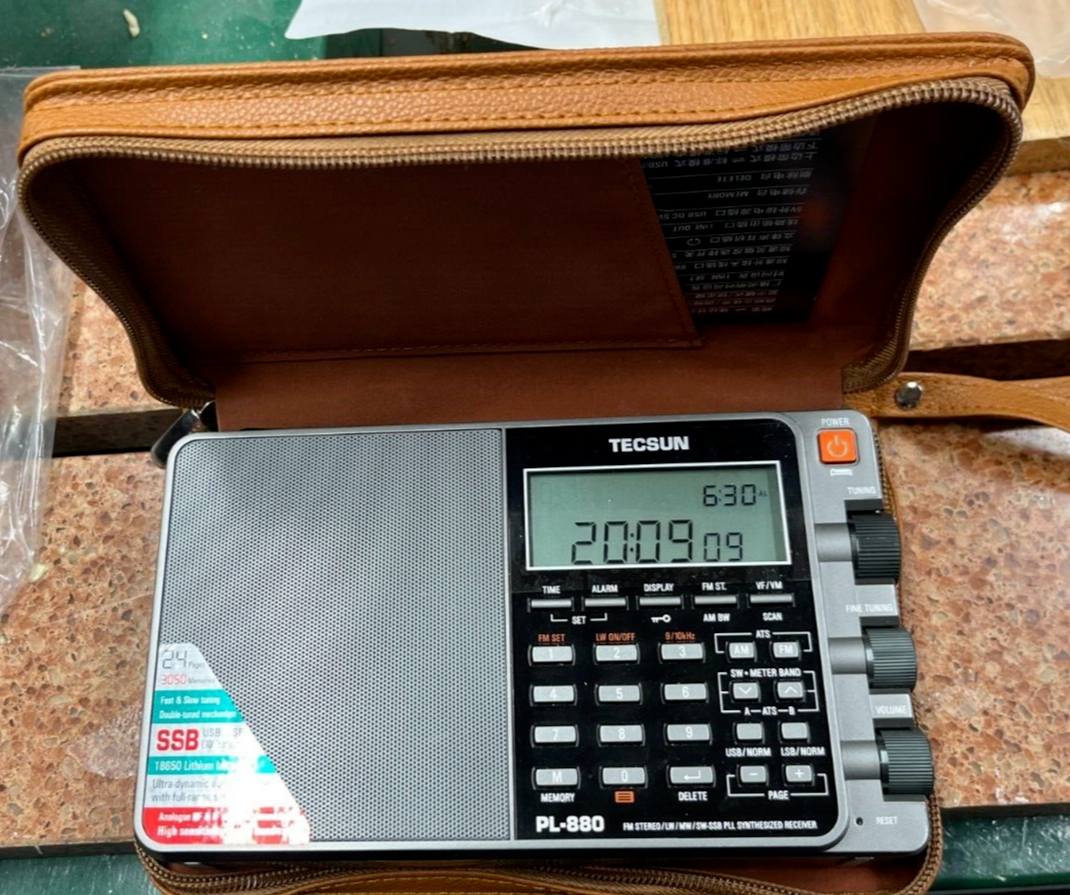
I’ve often said that I don’t get longwave where I live — there is just nothing on. Today, I was trying to receive an experimental broadcast on LW; I took my Tecsun PL-990 radio outdoors to my 20-foot wire up a tree (WUT) antenna where there is also a copper ground rod to see if I could catch the station. No luck, but as I was scanning LW just for grins, I came across a very strong AM Morse signal repeating “MSQ” on 351 kHz. It’s located in Culpeper, Virginia, broadcasting with a reported power of 25W (elsewhere I’ve seen 10W). This is no once in a lifetime DX reception, as that airport is only 43 miles from me.

Now here’s where it gets interesting. As I said, the station was quite strong on my PL-990 with the WUT antenna connected to the external antenna tip and the ground rod to the sleeve (and the radio switched to use the external antenna). When I attempted to receive the station on the internal ferrite antenna, there was nothing whatever, zilch, nada. I went back to the external antenna but disconnected the ground. The station was barely audible. Signal strength with the ground was 19-20 dBμ, and without 4-6.
Continue reading