After the roaring success of my Battle of the under $50 shortwave radios (36 views! ROFL) I’m inspired to up the ante and review models that could be purchased today with shipping between $50 and $100. The contestants this time are definitely more interesting:
The R-9700DX is about $55 with shipping from Kaito USA on eBay. The PL-330 is around $80 on Amazon. The ATS-405 can be found on Amazon for $73; its price varies. The XHDATA D-808 has become popular with shortwave listeners and it’s price has shot up about 30% in the last 5 months. It can still be purchased direct from the XHDATA website for slightly under $100.
Breaking news! The ZWS-A320 was defective; the antenna joints were frozen together in two places. I returned it and reordered. The second one’s antenna joints were frozen together in one place. I returned it. I’ve given up on this radio. ZHIWHIS customer support says that I’m the only one reporting the problem. (What are the odds?)
More news! This article was originally published in 2023 before a very important entrant appeared on the US market, the Qodosen DX-286. These articles are points in time, but sometimes things are important enough to go back and update the record.
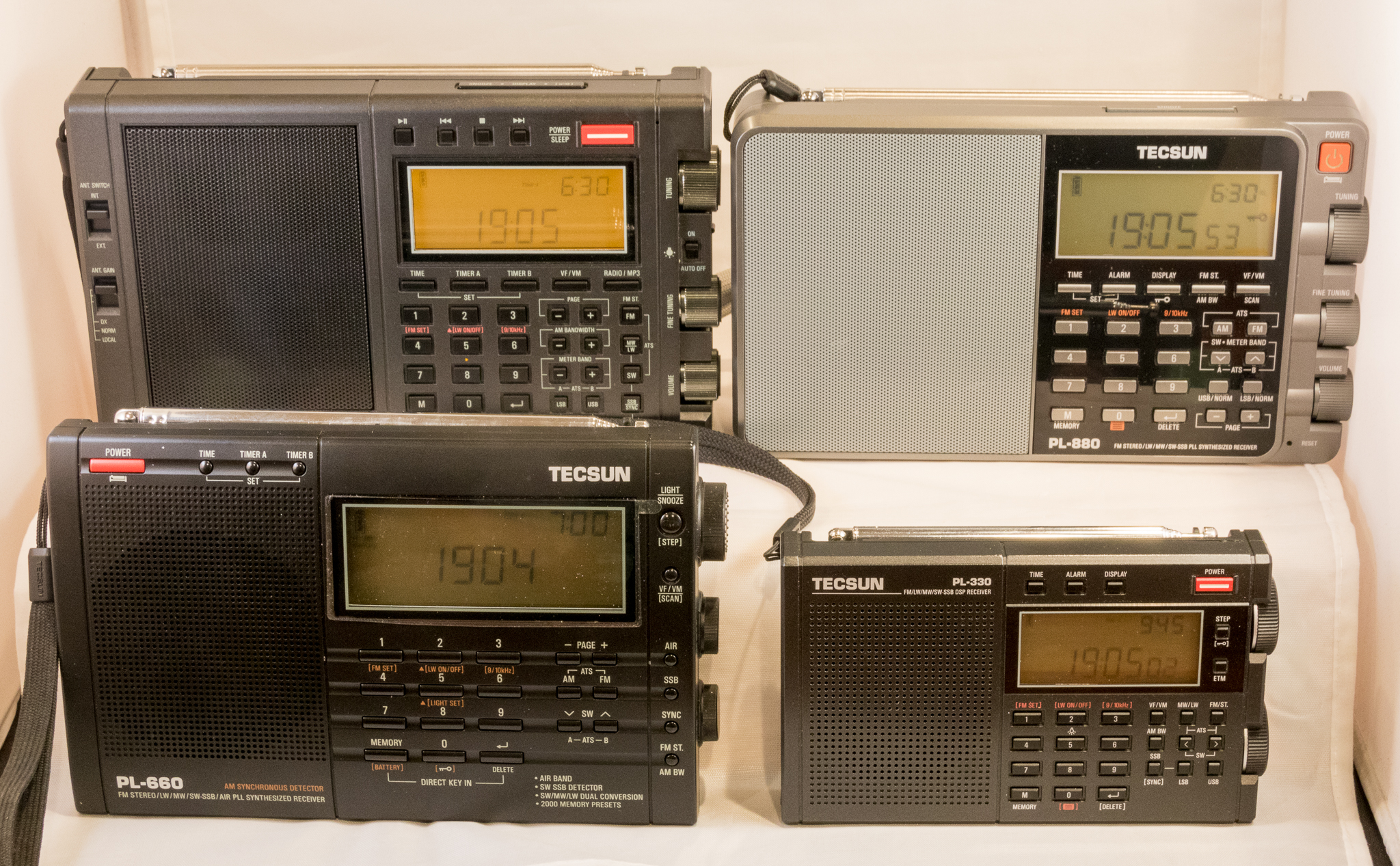
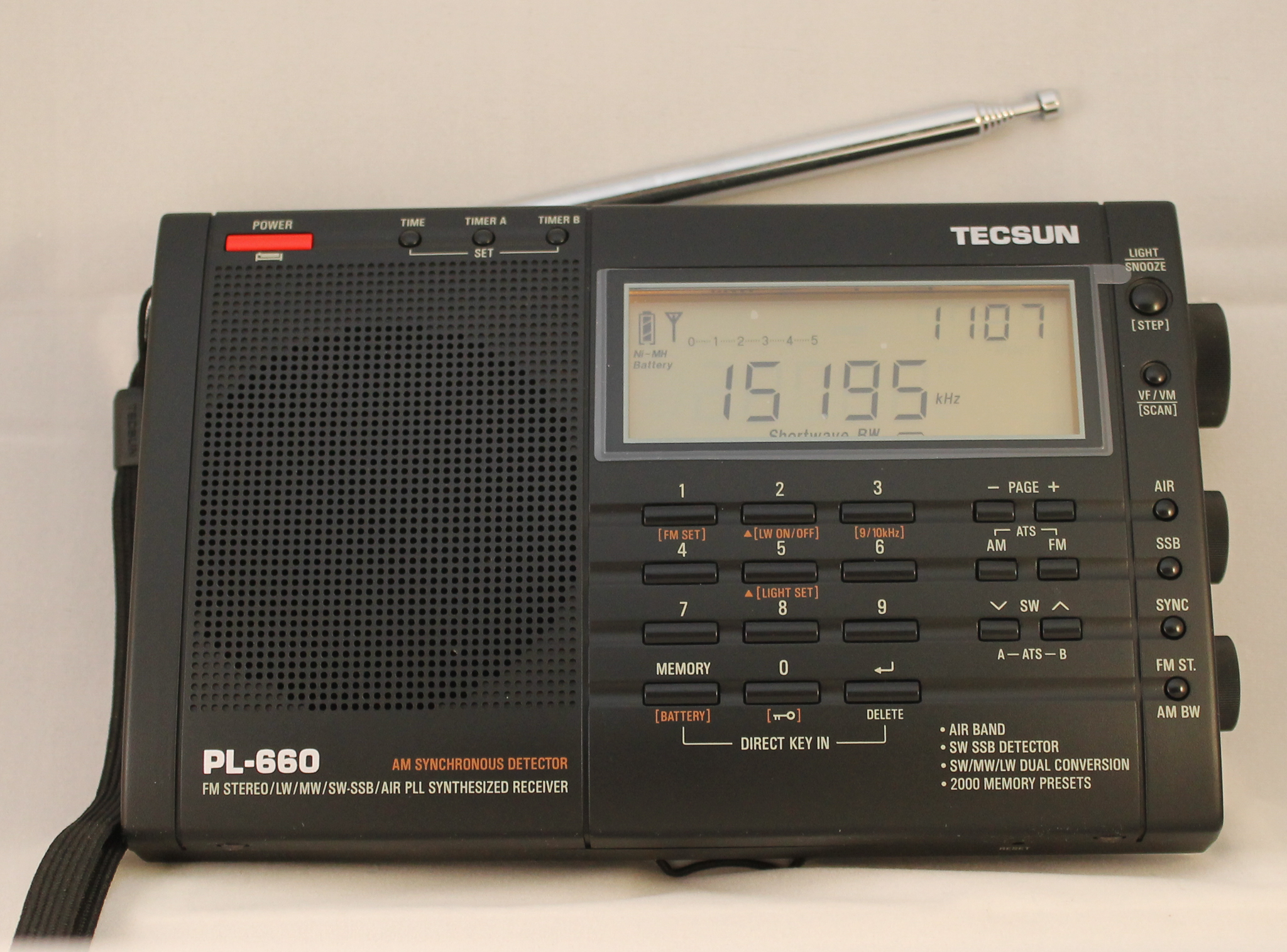
Here I compare 4 great Tecsun radios; Three are still in production, and the PL-660 can still be purchased new.
PL-660 Introduction
The PL-660 was introduced in 2010 and I’ve owned mine since December of 2011; it’s been a great radio and continues to perform magnificently. The PL-660 is a dual-conversion phase locked loop synthesized superheterodyne analog radio that covers LW/MW/SW/FM and AIR bands (this is the only radio on the list with AIR band). It receives SSB and supports synchronous detection. It has auto tune storage (ATS). Mine is firmware version 6601, an earlier model that doesn’t have the memory sorting and duplicate deletion feature; the other radios have the feature.
It’s been included in several articles at Blog or Die!:
My next acquisition was the PL-330, introduced in 2021, and bought soon afterwards as a travel radio to replace my PL-380, adding some useful features, most notably SSB and frequency coverage up to 29.999 MHz. The PL-330 is an all-digital radio based on a digital signal processing (DSP) chip. Mine is firmware version 3306. I haven’t done a proper review of the PL-330, but I have included it in some articles:
Editorial note: This review was written in July in 2023, a year and a half ago, and I do not know why it was not published. I’m reviewing it and publishing it now.
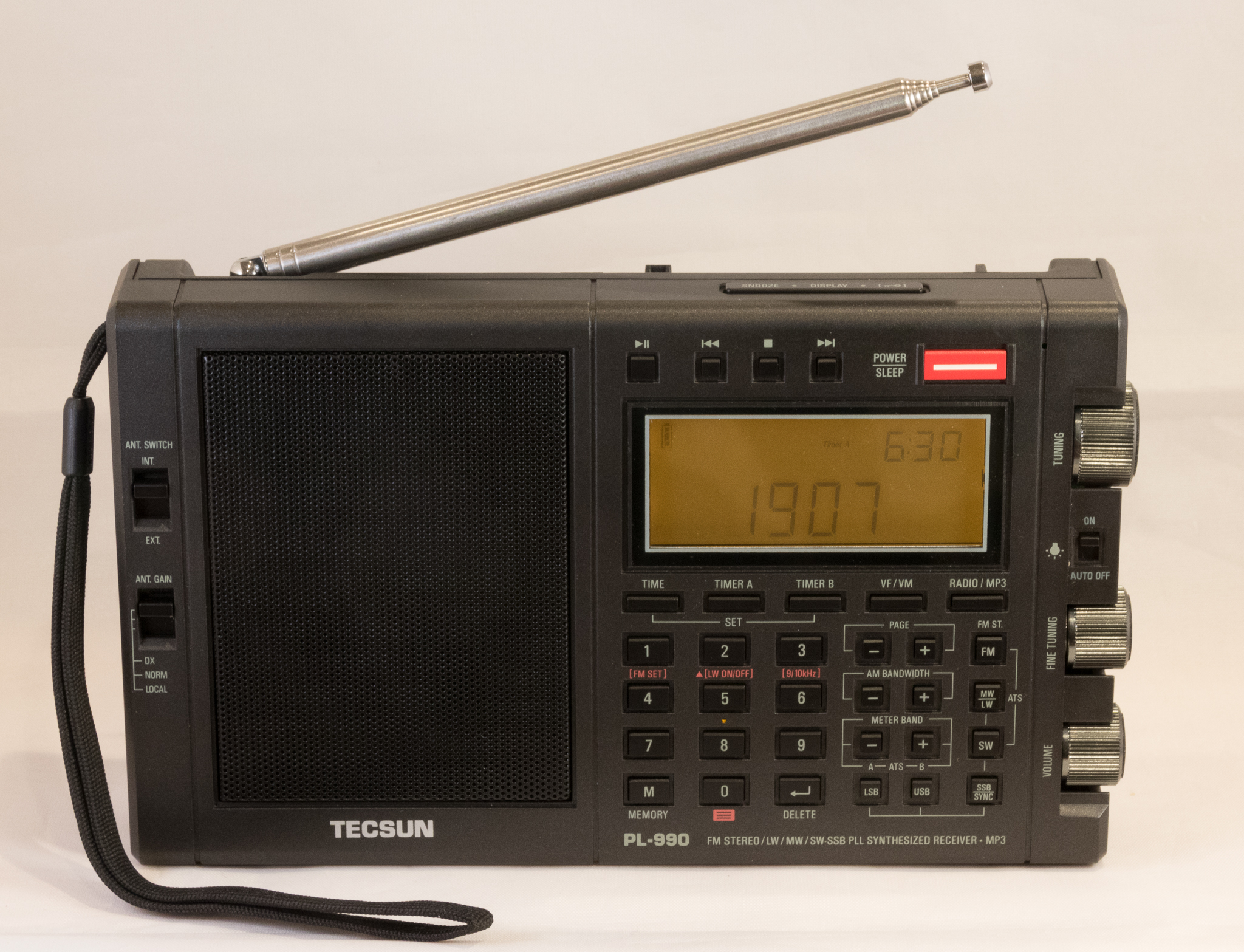
The Tecsun PL-990 is one of the top radios from the Tecsun product line. It was introduced in October of 2020 as a long-awaited upgrade to the PL-880. While it has a great deal in common with the PL-880, it adds Bluetooth and MP3 play, synchronous tuning, and reportedly an improved noise floor. I prepared a separate comparison of the PL-990 to three other Tecsun radios: the PL-330, PL-660, and PL-880 earlier.
Tecsun PL-990 radio / music player
I bought my PL-990 used from the Kaito USA store on eBay for about $80 less than a new one. The condition was superb, as you might be able to see in the photo preceding. The box has printed on it “2020 Ver. 1”. The serial number indicates it was made in August of 2021, but the package seal says 2022. My used version came with Bluetooth enabled (this is normally a hidden feature).
There is also an “export version,” the PL-990X. My reading suggests that the two radios are mostly the same except that when the MW channel spacing is set to 9 kHz, there is a change in the lower frequency limit of the LW band (goes down to 50 Hz).
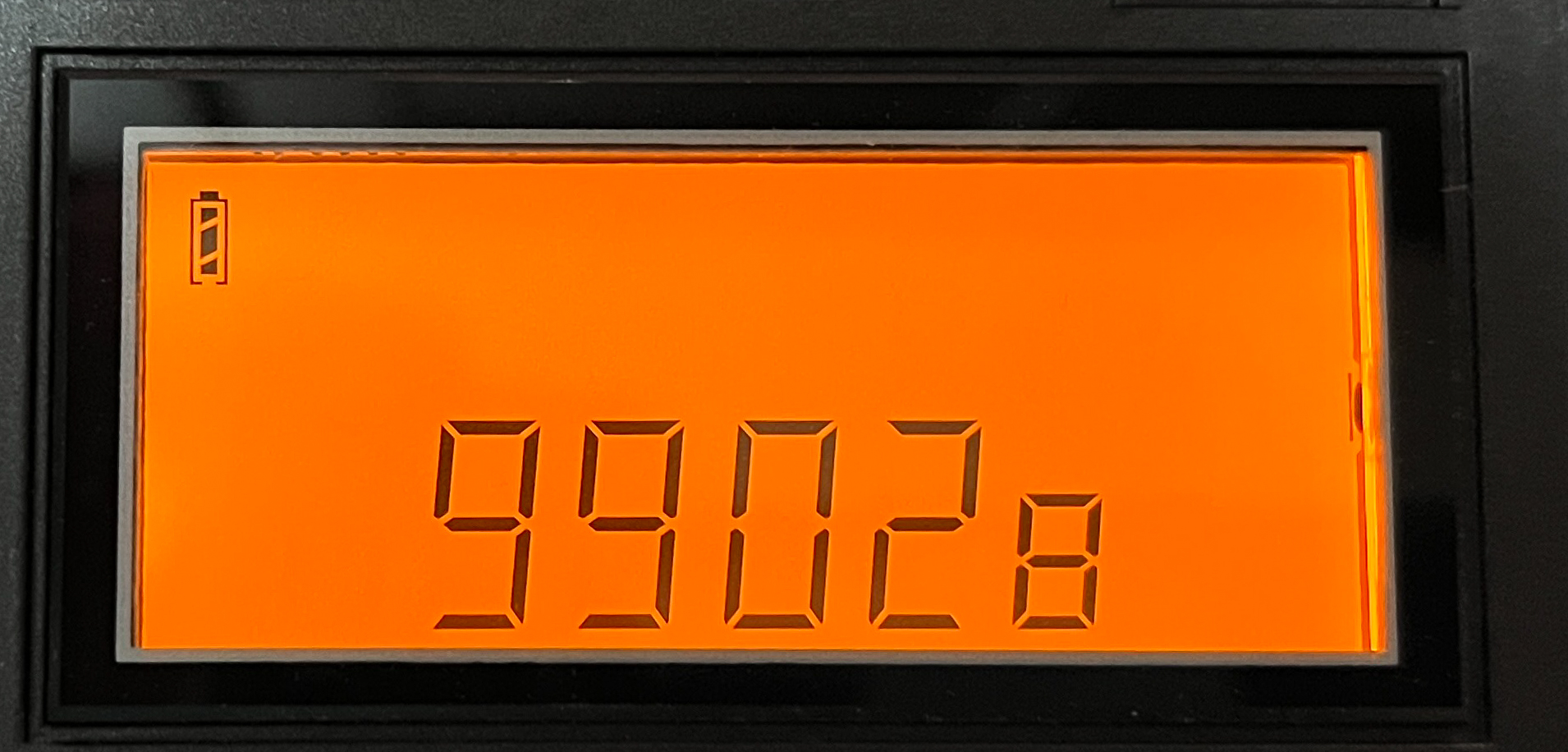
Various “hidden feature” lists exist for the PL-990, at least one of which purports to show how to access the firmware version. They did not work on my radio, rather an approach very close to how it’s done on the PL-880 worked. Press and hold the AM Bandwidth (-) key for 5 seconds, release, and press for 5 seconds more to display the value. The radio showed the firmware version as 9902b (I’m calling it a “B” instead of an “8”). Mine has fairly old firmware; I found one with “9904e” on the internet that may not be the latest either.
Goodies
Along with the radio, the Tecsun PL-990 comes with a zipper carry case, an AN-03L reel antenna, an English language manual, a Quick Start guide/amateur radio call sign prefix map, ear buds, a USB Micro charging cable, a USB power adapter and a Tecsun-branded 2500 mAh 18650 lithium ion rechargeable battery. Mine also included a 16 GB MicroSD card with one piano selection.
Basic features
The PL-990 is a PLL synthesized analog-tuned triple-conversion superheterodyne radio with a digital signal processor for decoding the signals and controlling bandwidth. It receives LW, MW, FM stereo and shortwave signals up to 29.999 MHz. The radio has has 4 bandwidth settings (9, 5, 3.5 and 2.5 kHz) for AM and 5 options (4, 3, 2.3, 1.2 and 0.5 kHz) for SSB.
The PL-990 features auto tune storage (ATS) that can search the shortwave bands and save stations it finds in one of 3150 memory locations divided into 25 memory pages. This generous number of pages creates the possibility of one memory page for each hour of the day, but other organizations are possible. The radio can also scan for the “next” available station and pause to let the user sample it with the option to store the station in memory.
It has a separate Fine Tuning control, a dial light switch, an external antenna jack (with a switch to select either the jack or the whip antenna), LINE OUT audio jack, Bluetooth speaker capability, a tone control, an always-on clock with seconds display and a sensitivity control. It has two alarms and a sleep timer.
The PL-990 features synchronous tuning that is useful in receiving signals with strong fading. With synchronous tuning, the radio substitutes an internally generated carrier rather then the one from the station.
The radio is powered by a single 18650 Lithium ion battery that can be charged in the radio with a Micro USB cable.
Hidden features
Like other Tecsun radios, the PL-990 has some “hidden features that work very well and are a great advantage. Various lists of hidden features exist for the PL-990. I’ll provide some links:
One peculiar feature is the ability to switch between the internal ferrite antenna and an external antenna on MW/LW. It works exactly the same as it does on the PL-330. The strange thing is that the PL-990 already has a front panel switch to swap antennas, so why the hidden feature? I found in testing that the hidden feature does work for MW and that the mechanical switch also works, but the signal strength from the external antenna is a little stronger with the switch than with the hidden feature.
Bluetooth
The stock radio has a button to switch between Radio and MP3 modes; however, a long press of this button with the radio off (keep pressing until the BT symbol appears and the radio says “ON”) enables a third option, and the button thereafter cycles between Radio, MP3 and Bluetooth. In Bluetooth mode the radio automatically allows pairing, and you only need to select it (the radio’s name is “TECSUN PL-990”) and it works. The radio’s play/pause controls now work with the source device (I used Windows 11) to play/pause audio or video. The sound is very good.
MP3
The MP3 function works well, and supports large song selections and MicroSD cards up to 128 GB. FLAC / WAV / APE / WMA and MP3 formats are supported. The user interface is a bit more sophisticated than what one commonly sees with the addition of albums (file folders). The Tuning knob switches albums and the Fine Tuning knob pick sounds within album.
On pretty much all other radios with MP3/Bluetooth capability, the Play/Pause button mutes the radio portion, but not the PL-990. Here one has to manually turn down the volume control to mute radio.
The Manual
The Kaito USA eBay listing for my radio said that it did not come with a manual, but that the buyer could download one if they wanted. I found the Operation Manual from from Tecsun Australia, a good source for Tecsun manuals, before the radio arrived. Kaito, however, did include a manual with my radio that was versioned: “2020.8 VER.1.” Besides the company logos on the back page, I didn’t see any difference in the two.
While one might quibble over the wording in a few places, the manual is very well done, attractive, literate and helpful. I give it an “A” grade.
Specifications
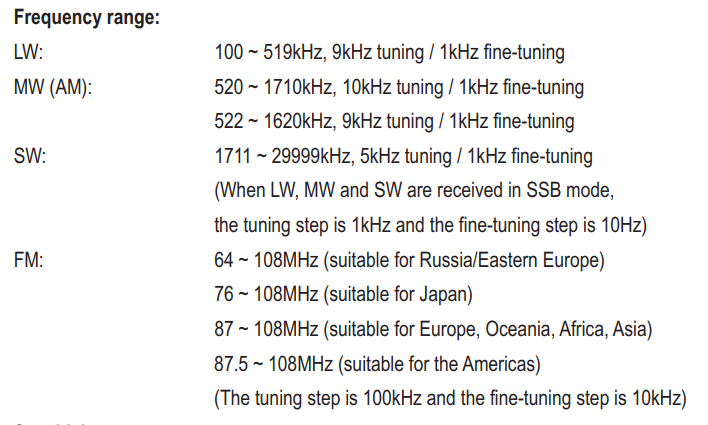
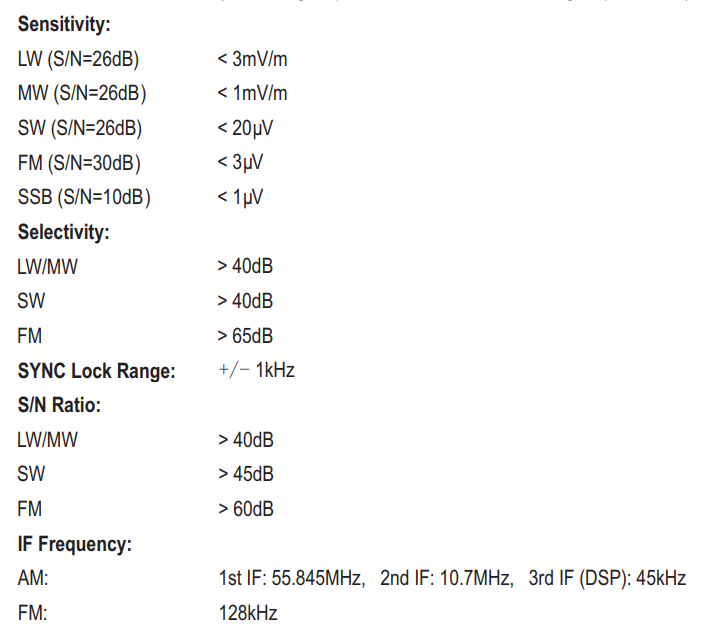
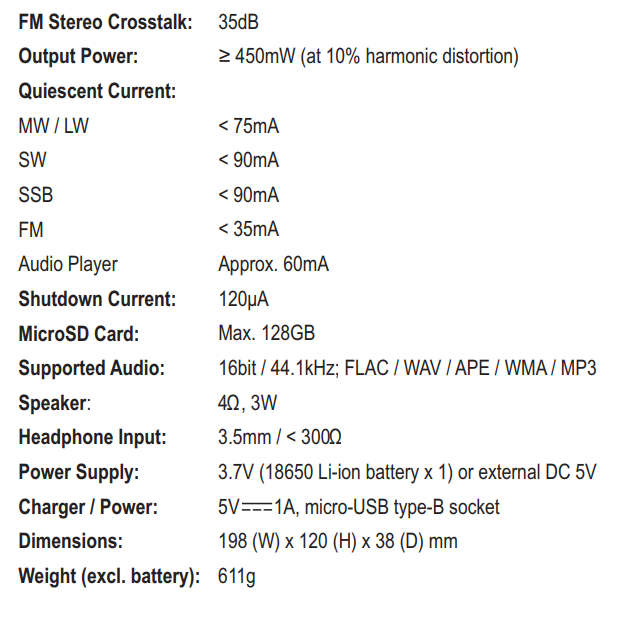
From the product manual:
Operation
While the PL-990 introduces more buttons than ever before, it still lacks one that I really want, separate VF and VM buttons (like the XHDATA D-109). Here one has to figure out what mode they’re in before deciding to push the button. With two buttons, one could just pick a mode directly.
The radio has an odd quirk in VM mode. To move through the memory locations, one turns the tuning knob. On my other radios, the channels change rather quickly. Here, one has to turn the knob between a quarter and a half a turn just to move one station. I might have thought this was a fault in my radio, but apparently not, as the manual says:
Rotate the [ TUNING ] knob with some vigor to browse through the station list.
Speed and vigor is not the issue so much as just a long stroke.
Performance
I started this product review some time ago and put it aside. In the meantime I finally decided to sell my PL-880 and keep the PL-990. More recently I read something online saying that users had been disappointed in the PL-990, expecting it to perform better than it did. I haven’t felt disappointed. I really like the way the radio works; it’s a dream to operate, but the question remains: does it get more stations? Conventional wisdom says that modern premium radios all get about the same stations. High environmental nose levels make this even more true. The difference is in things like AGC, SSB and convenience.
I like to compare things, and that’s going to be tough because what I have to compare it with are less-expensive radios. I don’t have a Sangean ATS-909X2 or any of those ICOM models. I don’t have a fancy antenna either — just a 20-foot wire up a tree (WUT) and an MLA-30+. I compared the PL-990 to other Tecsun radios in my article: Tecsun PL-ease: Comparing the PL-330, PL-660, PL-880 and PL-990 Shortwave Radios.
MW/FM
All my radios get the Daytime MW/FM band scan test and I’ll republish the latest version. [Note: I have updated all my radio articles with the Daytime Band Scans table to access the same graphic, so that any time I add a radio, it will appear everywhere.] I have a low MW signal level here and I test all my radios the same way, counting the number of audible signals on the two bands using the radio’s internal antenna. The radios are all oriented in the same direction (northeast / southwest) for MW and not rotated to improve reception. ( I ignore longwave because there’s aren’t any broadcasts where I live.)
As one can see, the PL-990 is at the top of FM reception and in the upper tier on MW. I would have hoped for a better MW score given the size of the radio and price point.
Shortwave
One of my favorite stations for testing is CFRX 6070 kHz in Toronto, about 400 miles from where I live. It’s not too strong, but audible most of the time. I went outdoors with my 4 best receivers, the PL-990, PL-660, XHDATA D-808 and Eton Elite Executive to check it out using just the telescopic antennas. The PL-990 was awful — until I realized that the sensitivity switch wasn’t in the DX position. After that, things evened out. There was no runaway winner in the group, except that all of the radios just about had to be turned up as loud as they would go, except that wasn’t needed by the PL-660. This is another of those situations where signal strength varies from minute to minute. I believe that if one spent the entire time on any of these radios, the experience would be similar. One variable here is that the tone switch was set to Treble on the PL-660 and Bass on the PL-990. The other two radios don’t have tone settings.
Tecsun PL-990 Comparisons on CFRX
This next video compares the radios using a Sangean ANT-60 reel antenna strung out to its full length of 23 feet (7m). I got the impression in this test that the PL-990 was a little better, but the reader can be the judge. The target was Radio Exterior de España on 9690 kHz. This is often a booming station, but not at 16:36 today.
SSB
My big SSB performance review (SSB!) was done before I bought the PL-990. Probably the best thing to do is update that rather extensive article to include the PL-990 rather than copy all that material here.
Audio
A radio with MP3 and Bluetooth capability ought to have good audio and the PL-990 is about the best I have encountered, second only to the PL-880 whose bass vibrates the table. Here is a sample, although it sounds better in person than in the video.
Tecsun PL-990 MP3 Audio Sample
Conclusion
Well, it looks like what I said at the beginning is more or less correct. All radios I’m considering get pretty much the same shortwave stations; the difference is in operational convenience, extra features and personal preference. ATS is awful on the D-808 and isn’t even supported on shortwave by Eton Elite Executive. The PL-990 has the best speaker, hands down and that’s good since it’s the only one designed to be an external speaker for other devices. The PL-660 has the edge on SSB. The two Tecsuns allow direct frequency entry without extra keys. The PL-990 is the only one in the group without AIR band. The XHDATA and the Eton support FM RDS, which might be useful if you’re into FM DXing. On the other hand, the PL-990 is the only one that supports an external MW antenna, which might be useful if you’re into MW DXing.
The PL-990 has become my “go to” radio for home use (the more compact PL-330 is my travel favorite). This conclusion is subject to change without notice.
Update
A year and a half later there isn’t much to say different. Since that initial review I’ve gotten a Qodosen DX-286 (that’s included in the MW/FM station count chart). The DX-286 has become my go to radio because it’s pocket sized. The PL-990 remains the FM champ, and the one with the best speaker. I use the PL-990 for SSB and for music or FM DXing.
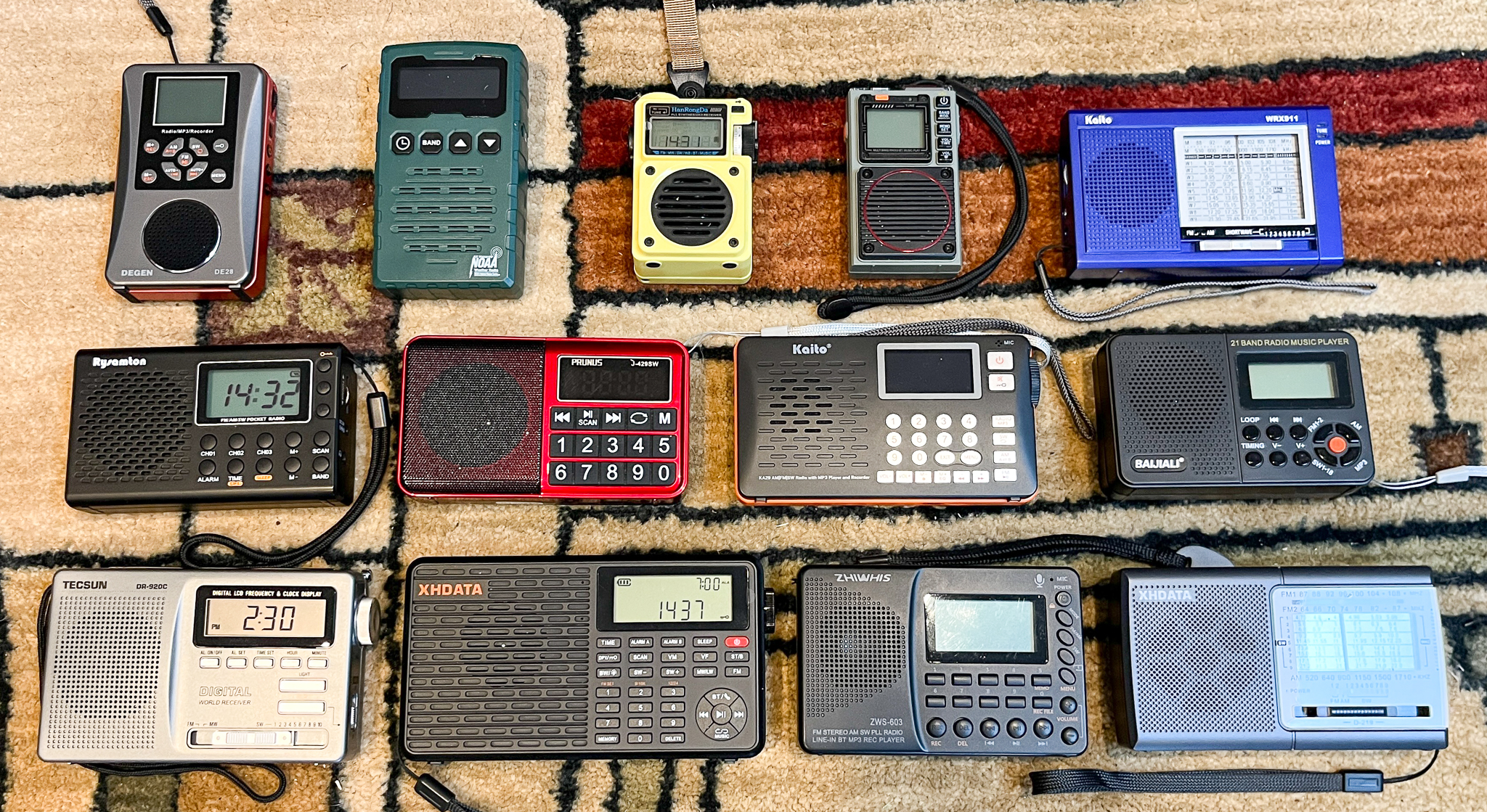
Today we’re looking at my current bottom-tier radios, ones with shortwave coverage that I could buy new today (July 16, 2023) delivered to me in the US for under $50. One radio in particular barely gets excluded, the Tecsun R-9700DX whose best price appears to be about $55 delivered from Kaito-USA. I am including the Raddy RF75A that can be purchased from Amazon by a Prime customer for $47.69 as of this writing although it’s usually a little over $50. The included Mesqool CR1015 old version is no longer for sale, but there is a similar updated model for around $19. There are notable radios in the category that I don’t have to test, like the Retekess V115, Tecsun PL-310ET, PL-360, PL-380 and R-9012. I particularly regret I don’t have one of the Tecsun DSP radios to include.
Contenders left to right, top to bottom: Degen DE28, Mesqool CR1015, HanRongDa HRD-701, Raddy RF75A, Kaito WRX911, Rysamton YK-M03, Prunus J-420SW, Kaito KA29, Baijiali BJL-166, Tecsun DR-920C, XHDATA D-109, XHDATA D-219, Zhiwhis ZWS-603
There are two types of DSP radios represented here, ones tuned by the absolute position of the tuning control and ones controlled by the relative changes in position of the control. They are indicated by DSP-A and DSP-R respectively in the table below (ones with no suffix don’t have a tuning knob). The physical position of the knob matters in the former type — you can change the frequency setting with the radio off, and the knob will have a definite beginning position and ending position. Radios with absolute positioning generally lack automatic scanning and storage.
In an attempt to give each of my radios at least a little love, I pulled down my Rysamton YK-M03 from the shelf today and gave it a whirl.
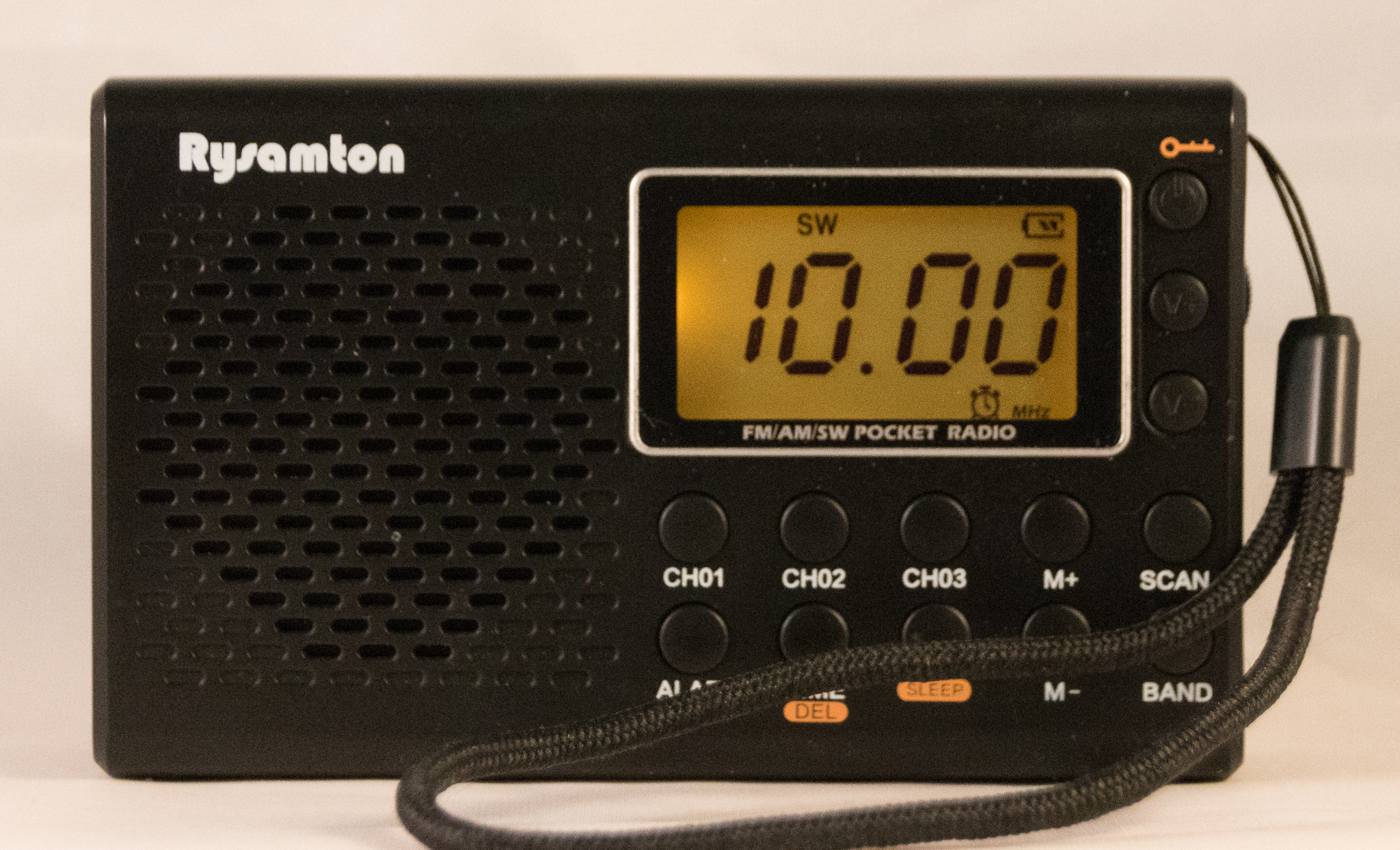
Rysamton YK-M03
Features
For something with this basement price it has quite a few features including: 12/24 hour click, alarm, sleep timer, earphone jack and earphones (included), dial light, auto tune storage, favorite station buttons, digital frequency display, carry strap, English manual and a lock button. It supports both US and European frequency ranges for MW/FM. There is FM stereo with headphones. The clock is visible with the radio off, and can operate for months on a battery charge. The display and button labels are very easy to read, as can be seen in the photo.
The photo preceding is with the radio off, where only the time, alarm, lock status and battery status is shown. When on, the radio indicates the sleep timer, alarm, frequency, stereo battery status, key lock, MHz/kHz and band. Dimensions are 115 x 70 x 31 mm.
Tuning is accomplished with a tuning knob, plus the ability to skip through the SW bands (long press the BAND button). Shortwave coverage is a fairly generous continuous spectrum from 3.0 to 21.85 MHz.
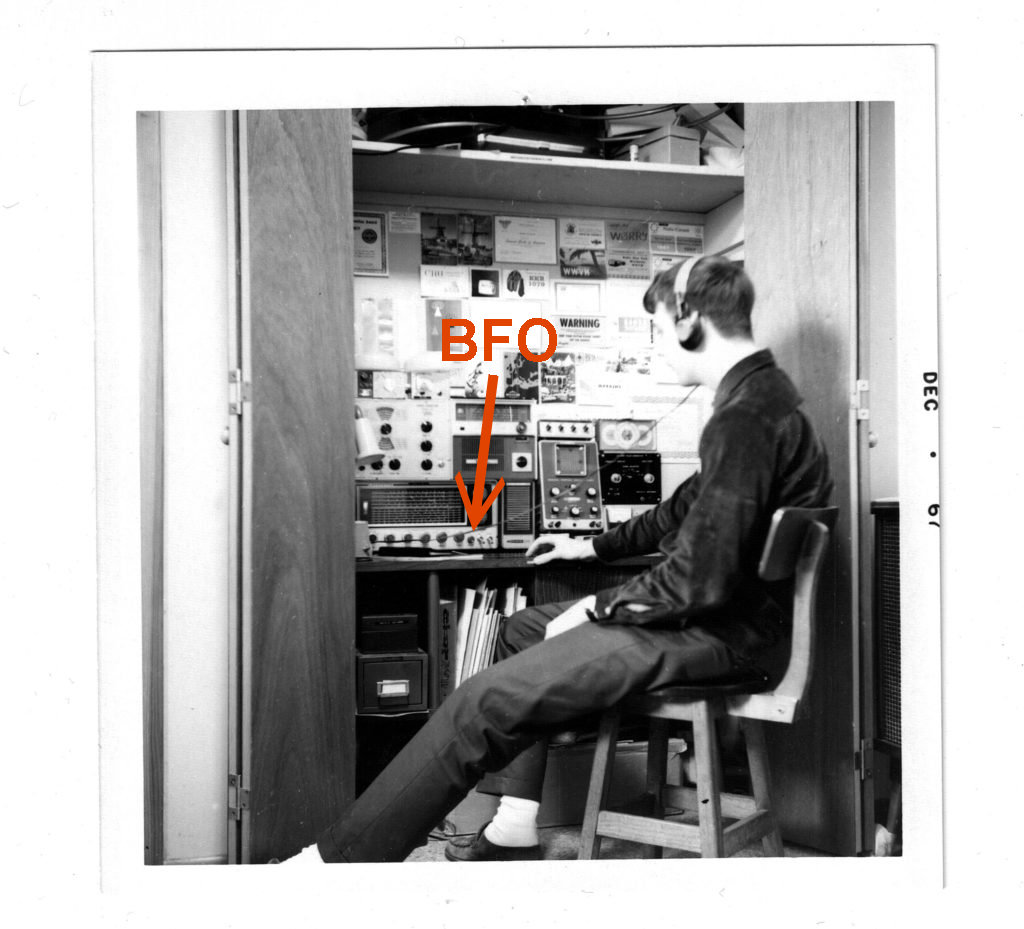
I’ve owned a radio with SSB and CW reception at least since I was 17 years old back in 1967, starting with the Lafayette Radio Electronics KT-340 I built from a kit.
I got into collecting shortwave radios a decade or so ago, and some of them had SSB that I don’t remember much about, including the Grundig G4000A, Grundig G5, Sangean ATS-505, and Grundig G3. They’re all sold now. Today I have several different SSB options, and that is the topic of this article.
Acronyms:
BFO – Beat Frequency Oscillator
CW – Carrier Wave
SSB – Single Sideband
LSB – Lower Sideband
USB – Upper Sideband
OSB – Oriented Strand Board
Single Sideband
SSB transmissions are used by amateur radio operators, marine communications, weather broadcasts and commercial radio operations. I’m primarily an international shortwave broadcast listener, but I occasionally listen to SSB, and at least some international broadcasting is on SSB.
A typical AM radio signal consists of a carrier wave that is in the center of the channel, and two sidebands carrying the audio content, one on a lower frequency (LSB) and one with higher (USB). The carrier in the middle carries no information, and the upper and lower sidebands each carry the same information. SSB saves energy by omitting the carrier and one sideband, and saves bandwidth with a channel only half as wide. It’s an elegant scheme, but it takes special equipment to decode it. SSB capability adds to the cost of radio equipment and it adds to the complexity of operation. CW has only the center carrier frequency with no sidebands and the same technology that allows reconstituting an SSB transmission also can generate a tone when detecting CW.
I’ll go over the operational characteristics of each of my SSB-enabled radios, and provide samples of SSB reception on that radio.
I’ve owned my Tecsun PL-660 since 2011 (12 years). It’s not the newest version of that radio –there have been firmware updates since then — but it works well, and is arguably the best radio I own. More recently the antenna started to pull apart from wear, but an OEM replacement was easy to find and easy to install. Now the radio looks and works good as new — the screen protector still on the display.
Tecsun PL-660 with screen protector (photo by the author)
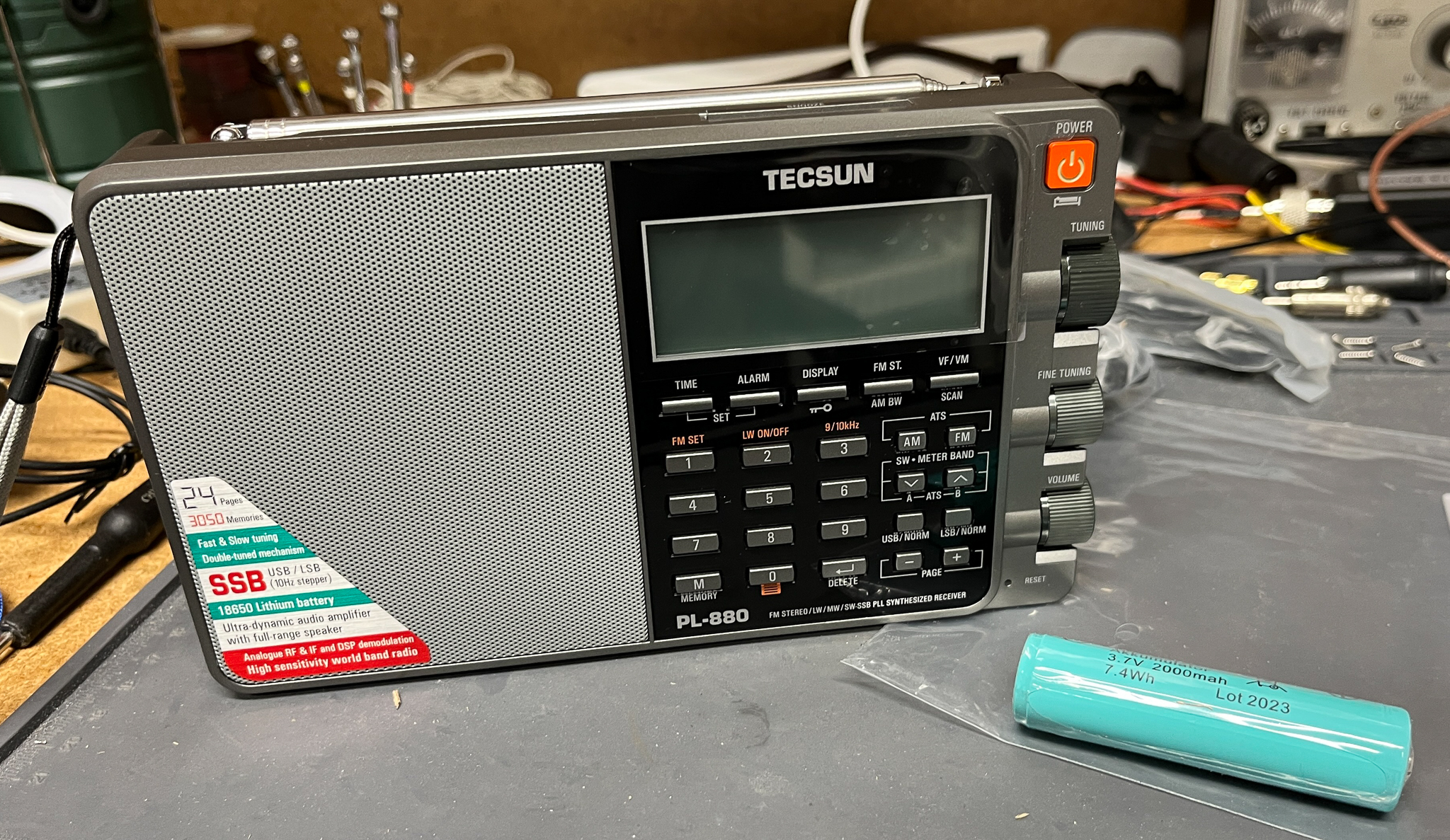
But I like to try “new” things and I ordered a Tecsun PL-880 from Kaito USA on eBay. I say “new,” but this radio has been on sale for almost 10 years.
Tecsun PL-880 (2023 manufacture) ready for its first battery
Bullet point differences
The PL-880, like its predecessor, is a PLL synthesized analog-tuned radio with digital display; the PL-660 is a dual conversion superheterodyne radio and the PL-880 is a triple conversion superhet. Unlike the PL-660, the PL-880 employs a digital signal processor for decoding signals and controlling bandwidth. The PL-660 has 2 bandwidth settings (wide and narrow) compared with the PL-880 that has 4 values (9, 5, 3.5 and 2.5 kHz) for AM and 5 options (4, 3, 2.3, 1.2 and 0.5 kHz) for SSB.
AI generated content may appear occasionally in articles and will be denoted with the 🤖 [robot emoji] symbol. Content comes most often from Microsoft Copilot, but may also come from Perplexity, ChatGPT, Duck.ai, Grok or Deep Seek.