I’ve had a DR-920 for years, but the internal string connecting the tuning knob to the variable capacitor went off track in a way I couldn’t repair, so I replaced it with a DR-920C. It cost $25.99 from Amazon, but I had enough “points” so there was nothing out of pocket.
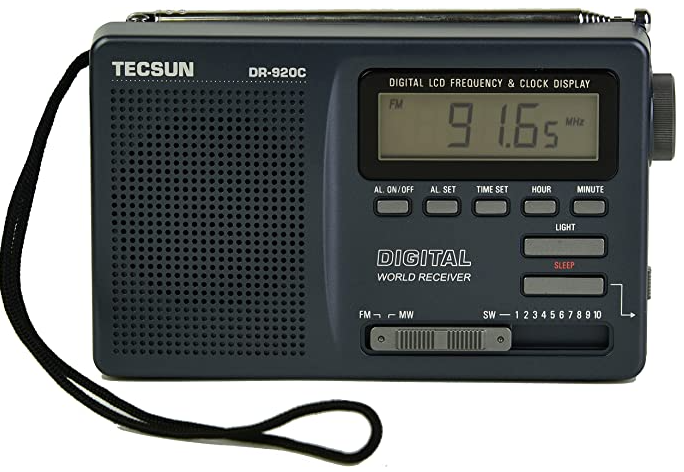
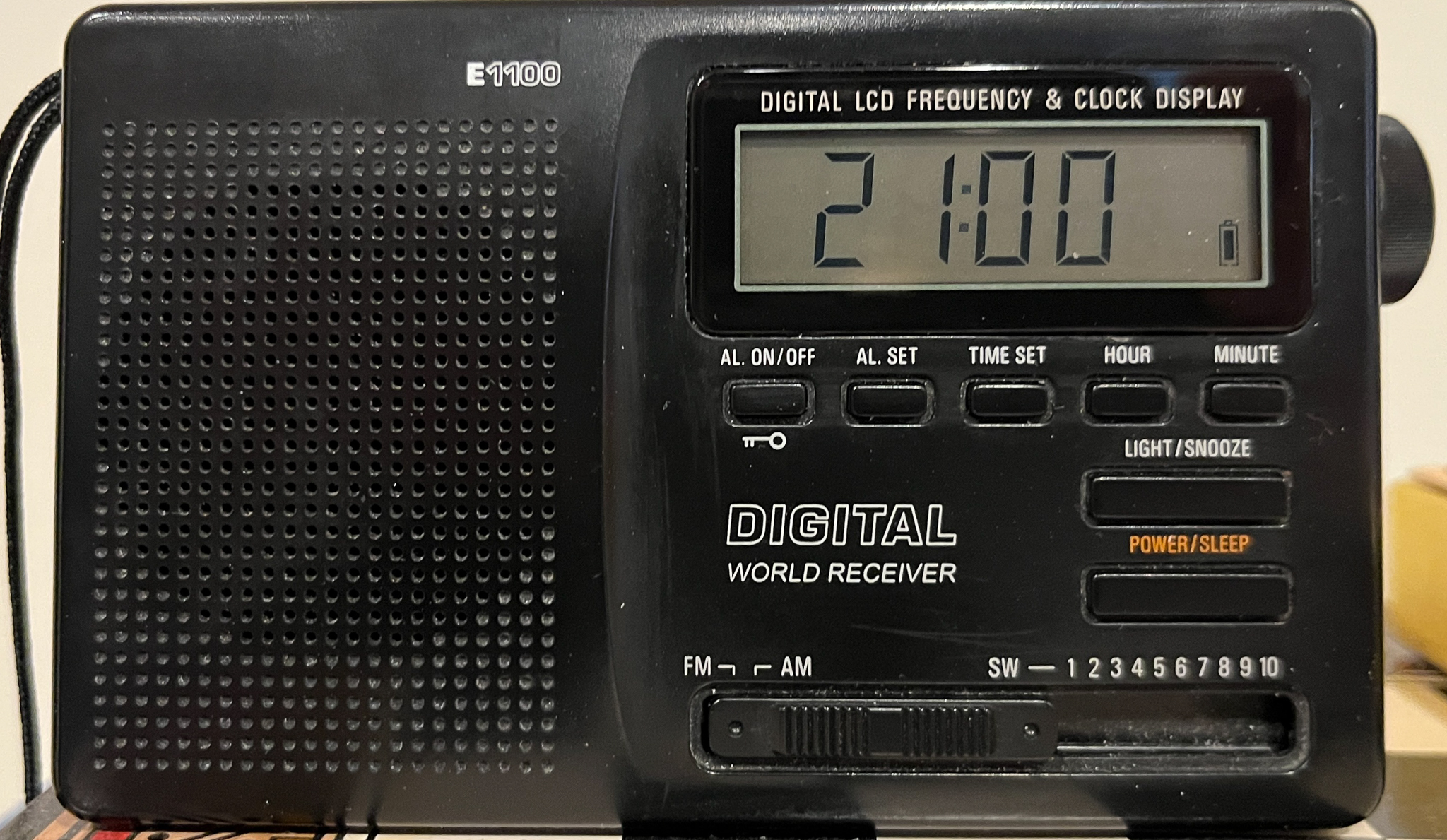
The DR-920C is very much like its predecessor, the DR-920. The only differences I can find have to do with the power switch and the alarm. The DR-920 had a POWER/SLEEP button and a LIGHT/SNOOZE button (see photo below). On the side was a slide switch to set the alarm to wake to RADIO or BUZZER. The DR-920C has LIGHT and SLEEP buttons and an ON/OFF slide switch on the side, no wake to buzzer.
Time and alarm setting is a bit unusual in that you have to press as many as 3 buttons at the same time. To set the alarm, for example, you must hold down both the AL SET button and the TIME SET buttons while pressing the HOUR or MINUTE button to change the value. I should add that this radio has a 12-hour clock only.
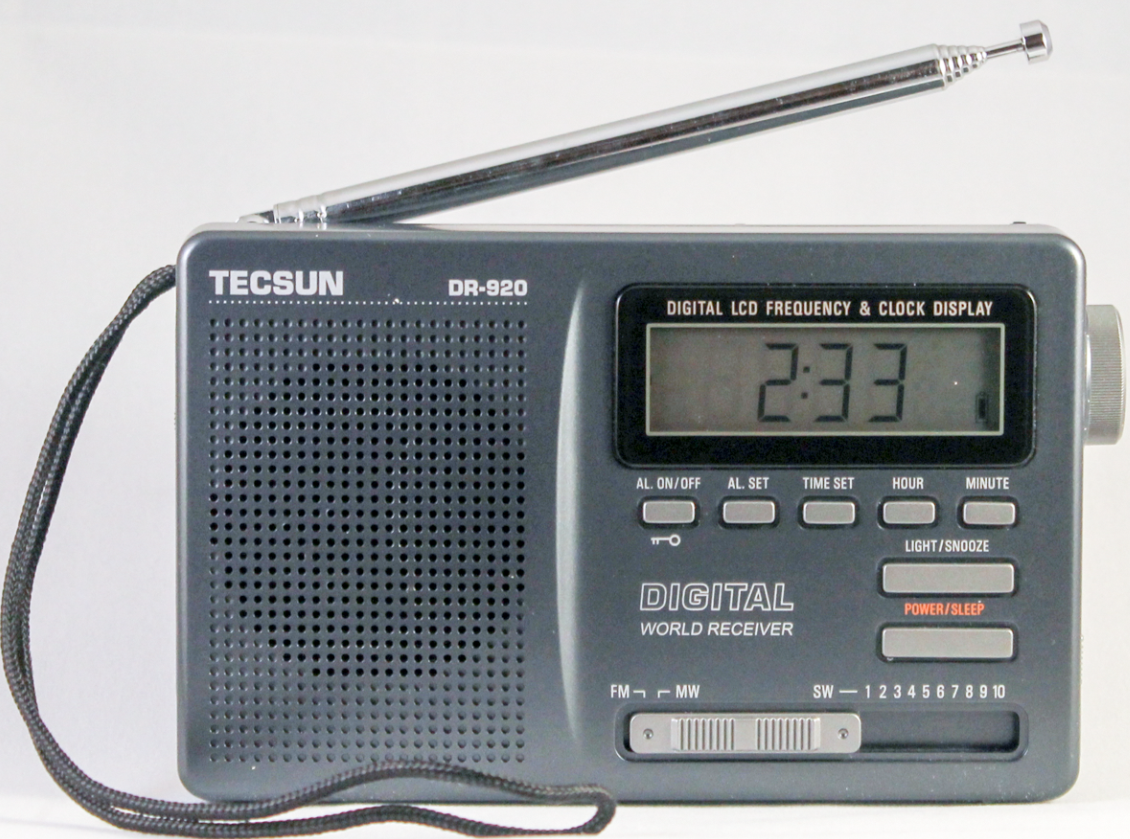
The LIGHT button illuminates the display with a dim amber light that stays on for 10 seconds. The radio has a kickstand, a rotatable whip antenna 22 inches long, a 3v power input jack and an earphone jack. It’s a pretty basic radio.
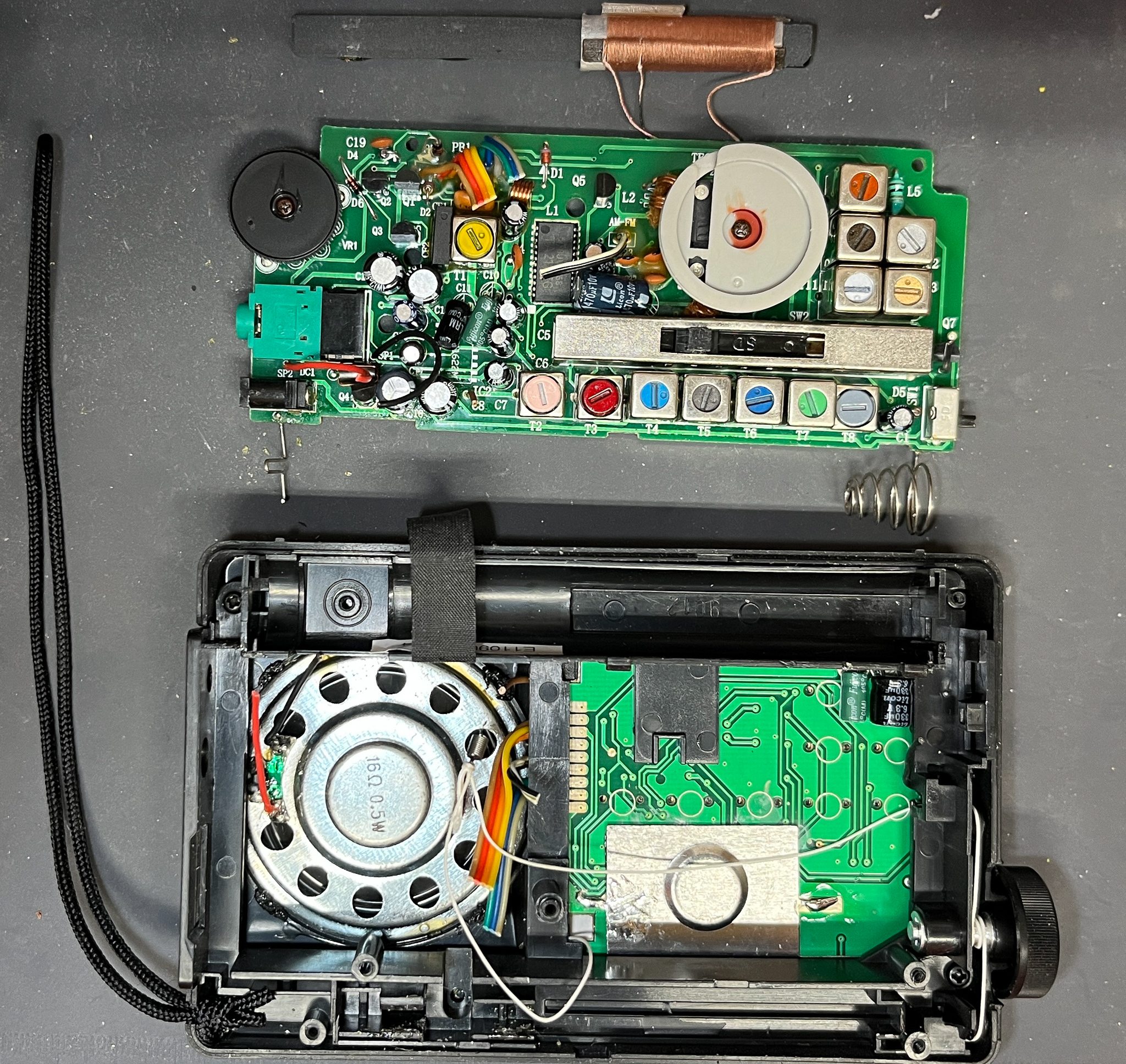
The DR-920C is a rare breed these days, an analog radio with a digital display run by a frequency counter. The radio uses single-conversion superheterodyne technology, one in which the radio frequency signal is mixed with an internally generated signal, producing a 455 kHz “intermediate frequency,” which is then amplified and demodulated to create an audio signal that is amplified and sent to the speakers. The technology has been around a very long time; my first radio back in 1965 was a “superhet.” The inherent problem with this technology, and why today one would see it only on a cheaper shortwave radio, is images. A station is heard not only on its actual frequency, but if the signal is strong an image appears on its frequency +/- 455 kHz (more on that later).
Continue reading