Solar! – EVCHE EC-2110BTS radio

One reason I’m writing this is that a Google search for EVCHE EC-2110BTS returned no hits. We can’t have that!
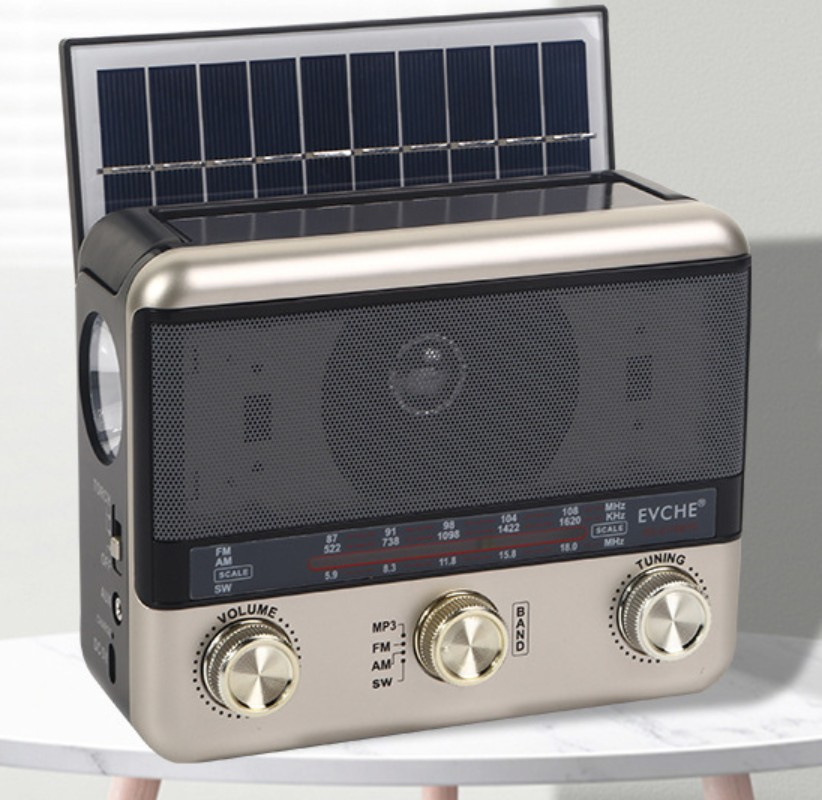
EVCHE EC-2110BTS AM/FM/SW radio, Bluetooth Speaker, MP3 player

I bought this AM / FM / SW / Bluetooth / MP3 player flashlight from AliExpress in hopes that the solar panel would be powerful enough to operate the radio directly, not just slowly charge the battery — and it does. In full sun the solar panel powers the radio at full volume.

Here are some of my observations:

  1. The manual is 4 pages, most of which don’t tell you anything useful. For example, the radio has an AUX jack that’s never mentioned, nor is the solar panel. But it states twice: “Plase stop using the machine before switch on or off to the power.”
  2. The radio is powered 5 ways: direct from solar panel, 18650 battery, 2 D cells (UM1), 110/220V AC power cord, 5V USB micro cable. A 220V power cable with a Schuko plug was included.
  3. No unboxing video because there is no box. It’s in a shipping bag surrounded with ample bubble wrap.
  4. It has just one SW band, 5.9-18 MHz.
  5. The radio is big! It’s about 6 3/4″ wide, 5 1/2″ tall and 3″ thick including the folded down solar panel.
  6. The radio arrived in good condition except that the solar panel mount was loose. I found out that the radio case underneath the mounting bracket had broken. The solar panel will have to be propped up to use.
  7. The radio mutes while tuning on SW. I’m assuming that shortwave tuning is done in 5 kHz increments. This means that a tiny turn of the tuning dial mutes the radio, advances the frequency 5 kHz and then unmutes the radio. The result is a “chuff, chuff, chuff” sound while tuning the radio.
  8. No earphone jack.
  9. This sucker is loud. Most of the weight is in the 3W speaker.
  10. The manual says not to take the radio apart, and the case is stamped with the same message. I took the radio apart (see photo following) to remove the rattling broken pieces of the solar panel mount.
  11. The internal flashlight reflector had a big fingerprint on it. The flashlight is mediocre, and far less bright that the current breed of lights in emergency radios.
  12. The AUX jack accepted both line and earphone level input OK.
  13. The TF card can be at least 64G. Max not specified in the manual. MP3/WMA/WAV formats accepted.
  14. Manual says it will operate > 300 minutes as a music player or > 500 minutes as a radio on one charge.
  15. Bluetooth paired easily with Windows.
  16. The tuning dial has a “scale” opening, but it it has no marking or numbers for the scale. I don’t think the designers knew what a scale is for.
  17. It does not appear that the charging light goes off after charging is complete (at least not so far after 15 hours).

I think radio this might make sense as a kitchen radio since it can be AC plugged and the audio is quite good for music, plus you can get local radio stations during a power outage in the sunshine.

OK, Google, it’s up to you now.
Posted in Radio, Technology | Tagged , , , , , , | 4 Comments

Fixing things

My father, uncle and my grandfather made their livelihood in large part by fixing things. My grandfather had a sign in his store:

We fix anything but a broken heart

My father was a watchmaker and when I was ready to go out into the world, he advised me not to become a watchmaker because in the future, watches would be electric and the movements in them would be replaced and not repaired. He was of course right.

My uncle repaired televisions, a dying business. I have a very nice but 10 year old Sony flat screen TV that failed. An internet search suggested one particular circuit board was the likely problem, but one on eBay would cost $250 and there’s a chance it wouldn’t work. New TVs of that size don’t cost all that much more, and newer ones have far more features — apps and things, plus a warranty. It’s not worth repairing (and not easy to dispose of either).

I have a cordless vacuum that died. I took it apart and determined that the problem lay in its circuit board. I’m sure I could get a new vacuum for less than replacing the circuit board.

Given my history and upbringing, it really galls me to throw stuff out rather than fixing it.

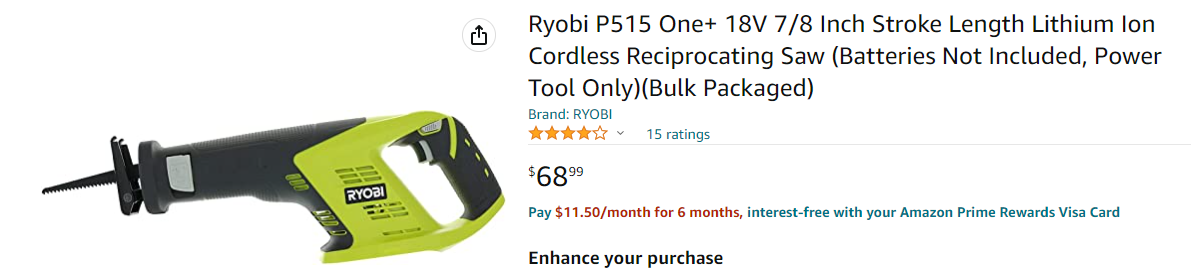
So, I’m going to try. I have a Ryobi P515 Reciprocating Saw and the blade has started falling out. Over time it fell out more frequently. I disassembled the saw and didn’t find anything immediately wrong, and concluded that it most be wear on the clamp that holds the blade. I tried new blades and that made no difference.

Ryobi P515 One+ Reciprocating Saw

This is far on the low end of reciprocating saws that usually run $100 and up (not including batteries). By the time I add batteries and a charger, a replacement might be $150 – $200. I already have a Ryobi One+ battery set, so I’m biased to try to keep with that ecosystem.

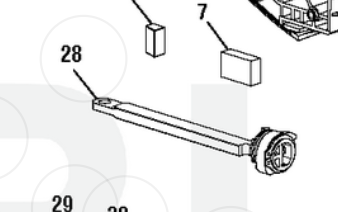
There’s no way anybody is going to repair my saw for $69, but I thought I had a chance to do it myself and I think I found the part that would have to be replaced, an ASSY SLIDING ROD AND BLADE CLA that costs $15.26 (plus $9 shipping).

Ryobi TTI-300309044 Assy Sliding Rod and Blade Cla

I was encouraged by the fact that Ryobi says this is a superseding part, so maybe the new part will last longer than the old one.

Update

I received the new sliding rod/blade clamp assembly, and was presented with a new problem, installing it. The process required removing two retaining rings:

Ryobi P515 Retaining Rings

I actually have a retaining ring tool, but it’s too large for these rather small and very stiff ones. I ended up grinding and filing down my tool until it fit and I actually got the rings off. Perhaps an hour later, the installation was complete and I was able to saw through a piece of rebar with the same blade that fell out after a few seconds before. SUCCESS.

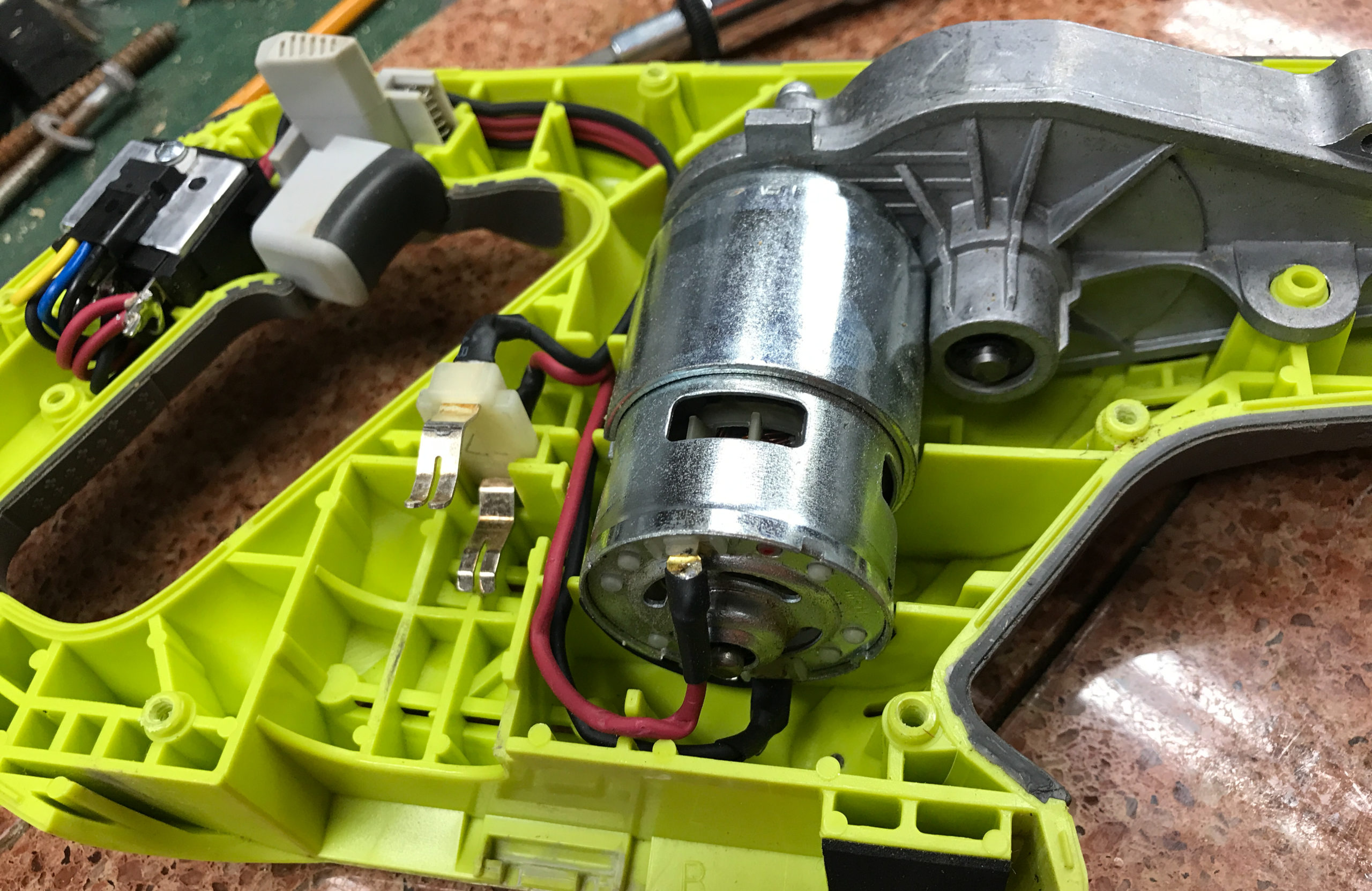
Photo showing P515 opened, motor center, power switch and safety guard upper left

What still bothers me is that I put a blade in the old part and I couldn’t pull it out. Oh well.

Posted in General, Personal | Tagged | 2 Comments

Habitat redo

I have two phrases I learned at Habitat for Humanity that give me comfort; one is:

  • Nobody will notice that except you

That didn’t quite work this time.

Here’s a photo of one of the Greater Charlottesville Habitat for Humanity job sites where I’ve been working the past few weeks. One of my jobs was to frame the access entrances to spaces under the stairs for 4 units. The job consists of cutting molding to size and installing it. The finished job looks like picture frames, so all the angles have to be close, and not all the entrances were perfectly square.

Habitat for Humanity houses.

I screwed up with the angle on one of the cuts and the end result was that I didn’t have enough material to finish the job. I felt bad about it. To try to correct the situation (with the approval a staff member), I took two scraps and carefully glued them together to make a piece long enough, sanded them down, and installed them. It was in a back corner of the utility room, behind a hot water heater, and I thought that with a little paint, no one would ever see the splice.

A building inspector, however, saw the entrance door and said: that space has no AC and as a result mold could grow in there; you can’t have a door. So this week when I arrived on site, all the doors and frames were gone and a drywall patch was in their place; my new job was to mud the patches, covering up any trace of what I did before.

That brings me to my second comfort phrase:

  • That’ll get covered up
Posted in Habitat | Tagged | Leave a comment

A red radio — the Prunus J-429SW

Can you say “Big black rubber buttons” three times really fast?

The big picture

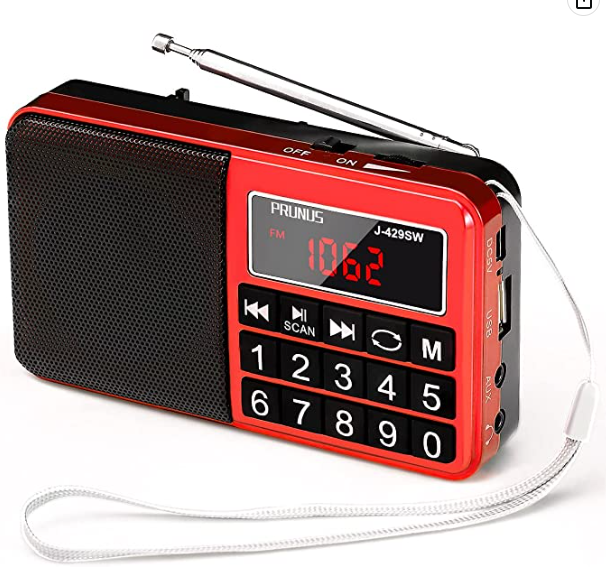
The Prunus J-429SW is an AM/FM/Shortwave radio with the ability to play MP3 files from a TF/MicroSD card or a USB flash drive. It can also act is a speaker when wired to another device with an AUX or earphone output. It’s powered by a BL-5C battery. The Prunus is available on Amazon for $19.99.

Prunus J-429SW (Amazon photo)

This model radio seems to be marketed to seniors, touting simplicity of operation and a highly readable display with large buttons.

Specifications

BrandPrunus
ModelJ-429SW
AM522-1710 kHz (See Note 1)
FM87-108 MHz (according to the box)
The radio actually tunes 70-108.
SW2.3 – 21.9 MHz
MP3 PlayingTF Card / USB flash
Input PowerDC 5V 500 – 1000mA
Battery 1200 mAh BL-5C (battery included)
Charging time3-5h
Playing Time5-6h (3-% Volume)
Speaker50mm 4Ω 3W
Earphone3.5mm
Dimensions31 * 126 * 73mm
Weight28g (radio) + 25g (battery)
IncludedRadio, battery, user manual, USB charging cable
Prunus J-429SW Specifications

Generally, an AM frequency range starting with 522 kHz indicates a radio intended for the European/Asian market where the frequencies are in 9 kHz multiples. Radios for the North American market start at some multiple of 10, like 520. For radios with digital tuning this is a big deal unless the radio can be switched from one configuration to the other. This radio, however, tunes in 1 kHz steps, so it doesn’t matter. Testing confirmed that AM actually works, but it is the weakest of any radio I own.

Casual use as an FM radio

Continue reading
Posted in Product Reviews, Radio, Technology | Tagged , , | 4 Comments

The radio nobody wanted Kaide KK-MP903

I sold about 80 radios on eBay, but there were just a few that nobody wanted. I went through those to see if there was anything worth saving from storage. One radio looked like it might be worth further study, a Kaide KK-MP903.

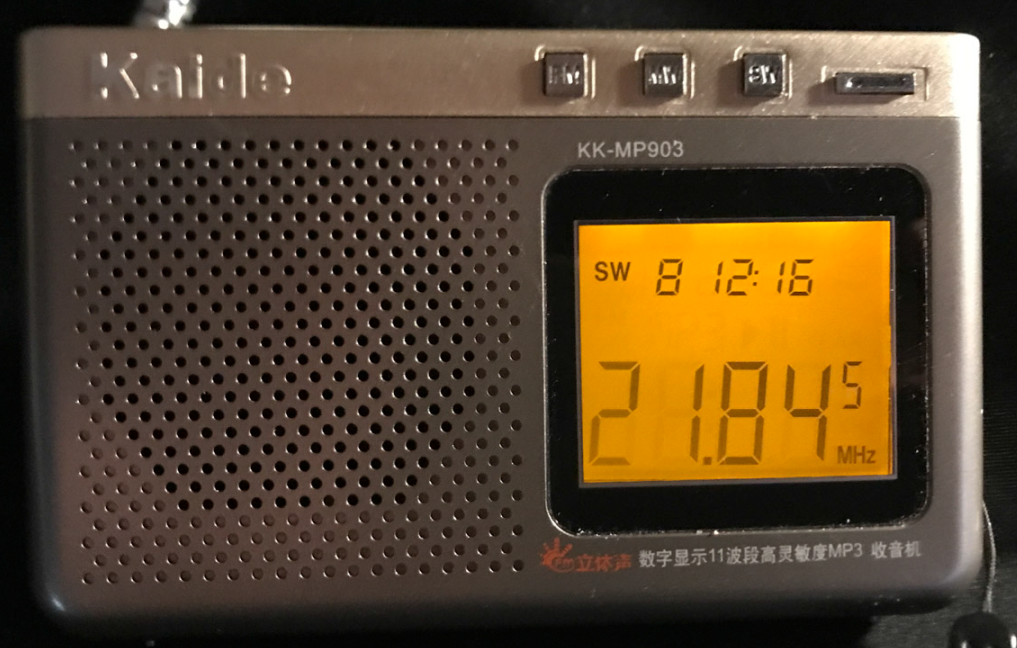
Kaide KK-MP903 AM/FM/Shortwave radio / MP3 player

It’s a remarkably simple radio, with only 4 buttons, a volume wheel and a tuning wheel, but it is an 11 band radio, clock, alarm, calendar and MP3 player. The radio uses 2 AA batteries, has an earphone jack and a jack for an external 3V power supply. The antenna extends to 17.5″ and swivels allowing it to be vertical when the radio is on its kickstand, a fob on the end of the carrying strap.

It has AM (MW), FM, FM1 (70-88 MHz) and 8 shortwave bands from 5.95 – 21.85 MHz. The chart later on shows discrete ranges for the bands, but in practice, there are no gaps between bands; coverage is continuous. Tuning is digital. Repeatedly pressing the FM button switches between the FM and FM1 band. Repeatedly pressing the SW button sets the tuning to the start the next shortwave band.

Inserting a MicroSD/TF card in the slot in the side converts it to an MP3 player. The same 3 radio operation buttons work as MP3 player controls, with function labels on the top of the radio.

This description was found on the internet, translated by Google from simplified Chinese [page no longer available]:

The performance improvement brought by DSP technology to this radio section product: digital filtering, strong selectivity, no tandem; full-band frequency tracking and locking technology, no image and frequency drift phenomenon in short-wave reception; digital processing technology makes the sensitivity comprehensively improved, There are many receiving stations; built-in digital power amplifier, high power, low distortion; FM stereo output.

Also at the same site these specifications:

  1. Frequency coverage
    FM: 87 -1 -108 +1 MHz 
    MW : 520 -60 – 1710 +60 kHz
    SW1: 5.95 – 6.20MHz 
    SW2: 7.10 – 7.30MHz 
    SW3: 9.50 – 9.90MHz 
    SW4: 11.65 – 12.05MHz 
    SW5: 13.60 – 13.80MHz
    SW6: 15.10 – 15.60MHz 
    SW7: 17.50 – 17.90MHz ( Shortwave frequency coverage is not narrower than the above requirements ) 
  2. Noise limiting sensitivity 
    FM : 30 Noise Limit Sensitivity 10 dBu 
    MW : 26 Noise Limit Sensitivity 70 dBu 
    SW : 26 Noise Limit Sensitivity 35 dBu 
  3. Signal-to-Noise Ratio 
    FM: 98 MHz    ≥ 50 dB 
    AM : 1000 kHz  ≥ 40 dB 
  4. Selective MW: 1000 kHz   +/- 9 kHz  ≥ 40 dB 
  5. FM stereo separation: ≥25 dB 
  6. Maximum current consumption: ≤ 180 mA 
  7. Maximum output power: ≥100 mW, maximum distortion ≤ 20 % 
  8. Size: 124*77*21mm

A brief test using just the whip antenna picked up many stations on shortwave. Here’s Radio Romania International on 7420 kHz on June 5 at 0010 UTC heard in central Virginia.

Kaide KK-MP903 AM/FM/Shortwave/MP3

Controls

The functions of the 4 buttons were easy to discover. There are basically 3 sets of functions, when the radio is off (clock, calendar, alarm functions with dates and times selected with the tuning wheel), when the radio is on (band selection), and when the radio is on and a micro SC/TF card is inserted (next track, play/pause, previous track). Counterclockwise rotation of the tuning knob increases frequency.

Setting the clock/calendar/alarm

Settings are accomplished with the radio off. A quick press of the MW button turns the alarm on and off.

To set the clock:

  1. Turn the Alarm off (MW button)
  2. Short press the FM button to enter time setting mode
  3. Rotate the Tuning knob to set the hour
  4. Short press FM and rotate the Tuning knob to set the minute
  5. Short press FM and rotate the Tuning knob to set the year
  6. Short press FM and rotate the Tuning knob to set the month
  7. Short press FM and rotate the Tuning Knob to set the day
  8. Short press FM to exit setting mode and start the clock.
  9. The Week number is set automatically

To set the alarm:

  1. Turn the Alarm on (MW button)
  2. Short press the FM button to enter alarm setting mode
  3. Rotate the Tuning knob to set the alarm hour
  4. Short press FM and rotate the Tuning knob to set the alarm minute
  5. Short press FM to exit alarm setting mode

Sleep timer

With the Radio on or off, long press the Power button until 90 is displayed on the screen. That indicates a sleep time of 90 minutes before the radio automatically turns off. Repeatedly press Power to decrease the time in 10-minute increments, or until “On” is displayed, indicating that the sleep timer is disabled.

Features

The small speaker does not produce rich sound on radio, nor is there any significant bass response even with good earphones. Sound is much better playing MP3 files.

The display is large and easy to read. In radio mode, the band is displayed along with the time and frequency. There is also a stereo indicator for FM. When the radio is first turned on, a button is pressed, or the tuning wheel turned, the display is illuminated with a pleasant amber glow. When the radio is off the radio displays the date and time. In MP3 mode, the radio displays the time of day, the track number and the elapsed time played in the current recording. It does not play files in the WMA format.

My only puzzle is how (if possible) to set the AM tuning step to 10 kHz instead of 9. I’ve found virtually nothing about this radio on the internet. I probably bought it on eBay a dozen years ago.

Posted in Radio, Technology | Tagged , , | Leave a comment

Zhiwhis ZWS-603 vs Kaito KA29

Two radios with similar function, but significant differences

The Kaito KA29 received a lot of attention by reviewers when it became available in August of 2014, but I only got mine today. The Zhiwhis ZWS-603 is much newer, from December of 2021.

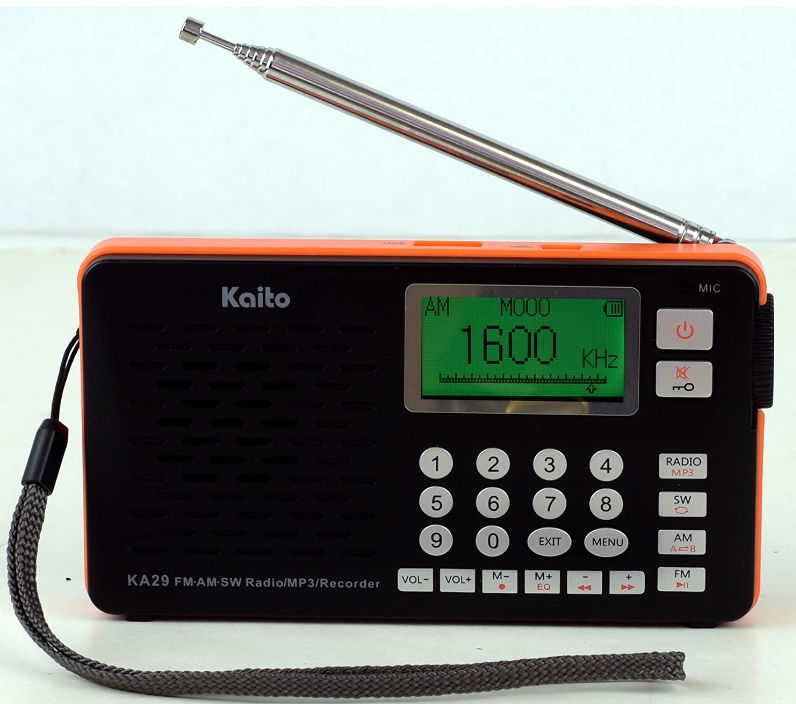
Kaito KA29 AM/FM/Shortwave radio MP3 player front view.
Kaito KA29 (Amazon.com photo)
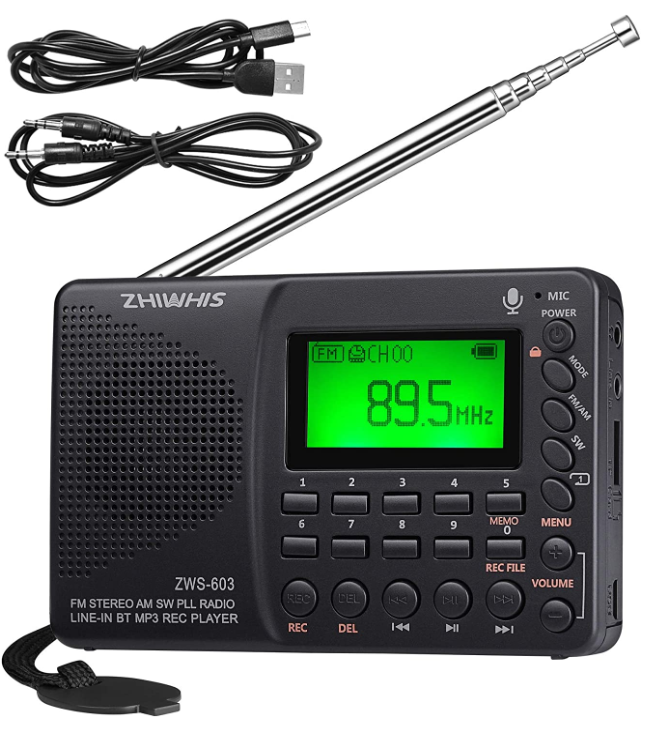
Zhiwhis ZWS--603 AM/FM/Shortwave radio, MP3 player, Bluetooth speaker
Zhiwhis ZWS-603 (Amazon.com photo)

There are some striking similarities in the radios, inviting a comparison. At the most basic level, both units are AM/FM/Shortwave radios that add the capability to be used as external speakers, to play music files from TF/SD and record from radio or from the microphone. Both use the same BL-5C rechargeable battery format. Both have a graphic equalizer and fall into the “ultralight” radio category. The ZWS-603 goes for $25.77 on Amazon, compared to $34.99 for the KA29.

Continue reading
Posted in Product Reviews, Radio, Technology | Tagged , , , , | 2 Comments

Radio nostalgia

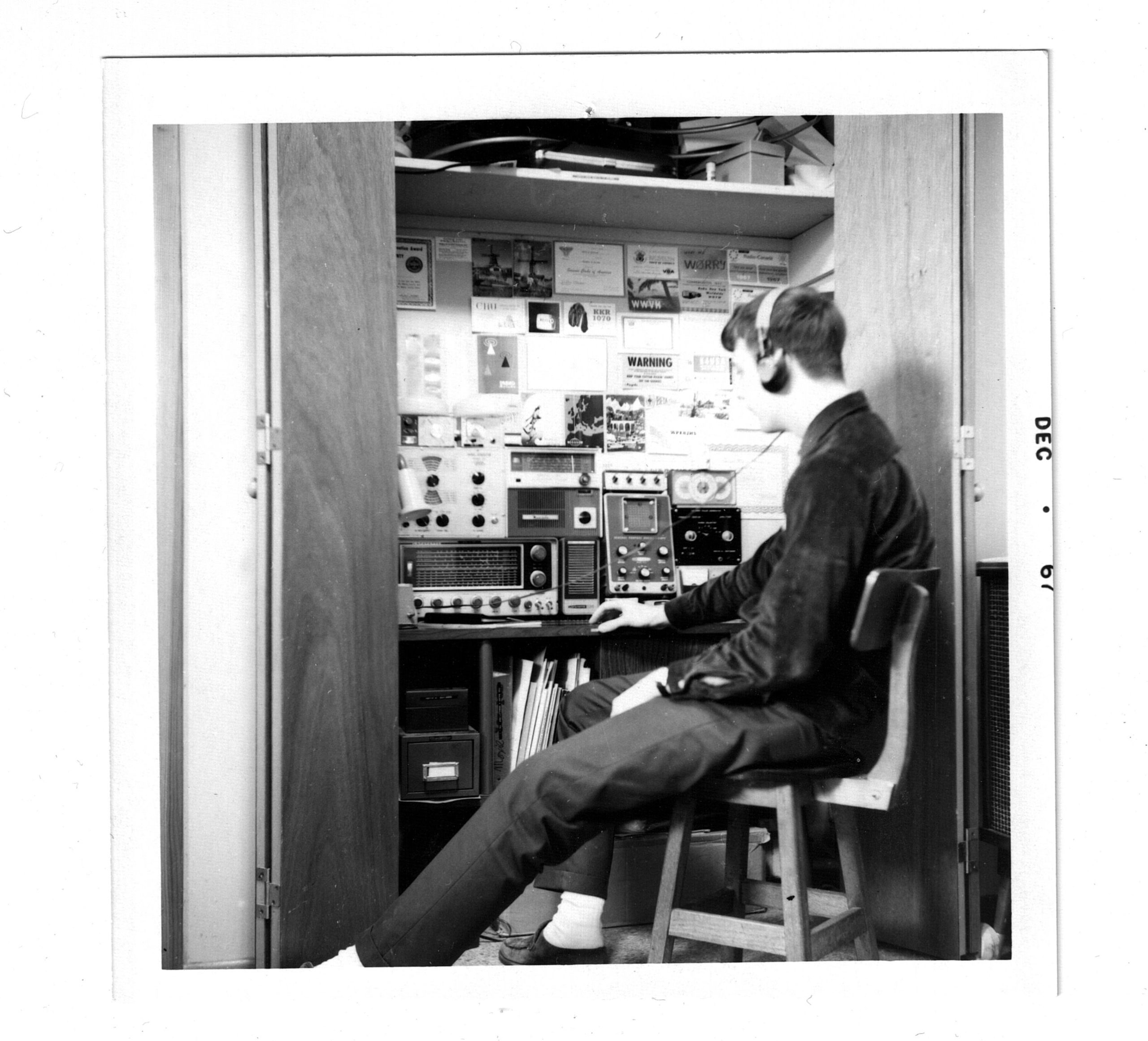
Here’s my nostalgia photo from December of 1967. My “radio shack” was a bedroom closet.

My “radio shack” from December, 1967

The Eico signal generator, the Lafayette KT-340 shortwave receiver and the Heath kit IO-21 scope were all built from kits. Sort of in the center is my first shortwave radio, a Nanaola 10NT-504, 10-transistor single conversion radio that covered LW from 145-375, MW, and shortwave from 1.8 to 28 MHz in three contiguous bands. It had Vernier tuning. Great little radio.

On the wall I can recognize QSL cards from Radio Moscow, RCI, CHU, WWHV, Radio Japan, K4USA and WNYW.

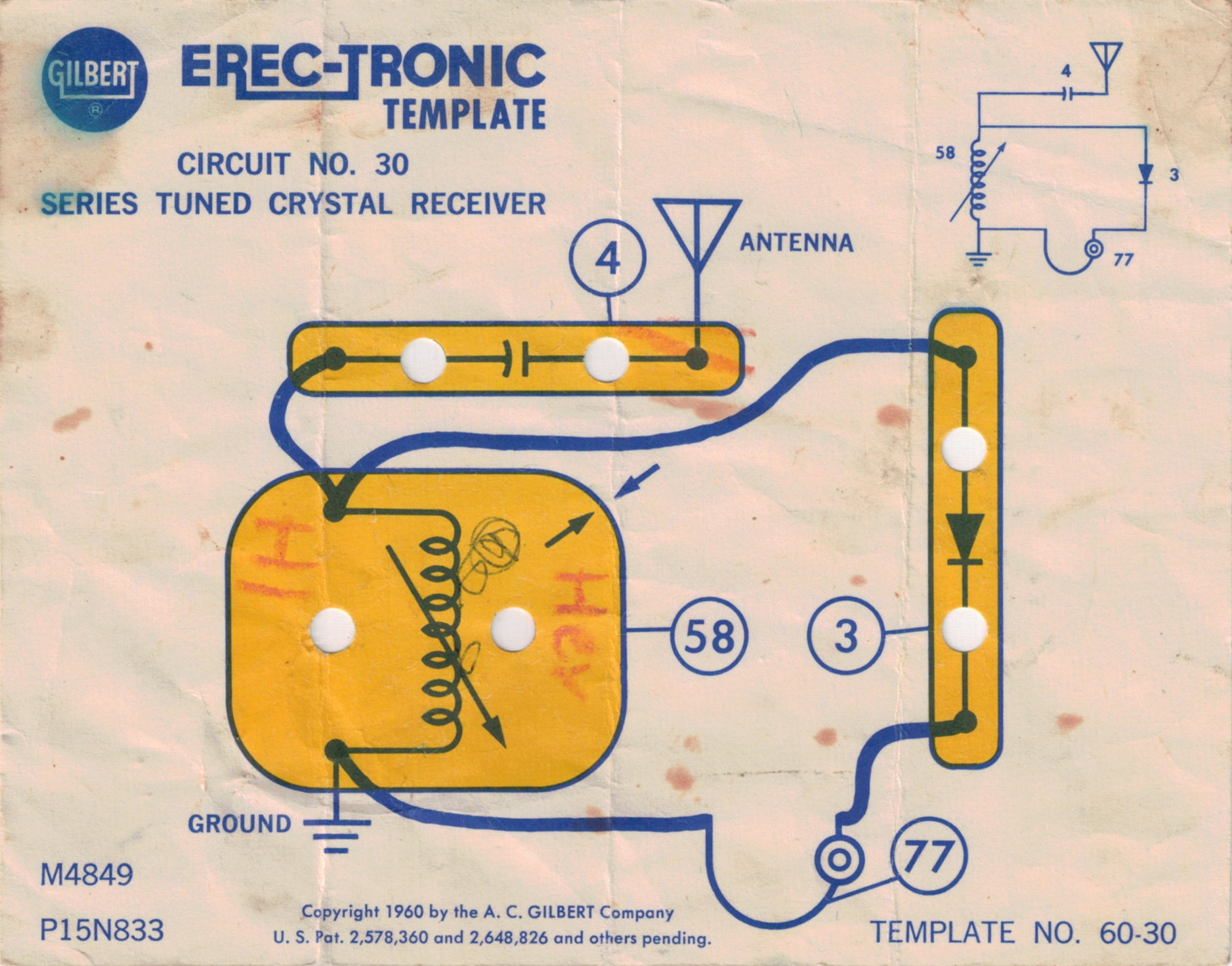
In the same file box where I found the photo, I found the instruction sheet for the 10NT-504, which I’ve scanned for posterity. Also in that box was my very first radio:

Gilbert series-tuned “crystal radio” schematic and build sheet

Posted in General, Personal, Radio, Technology | Tagged , , , , | 1 Comment