Tecsun PL-118 Stereo FM radio review

I usually write about shortwave radios, but this FM-only radio deserves a mention. It represents a  cost/performance/feature breakthrough based based on a new integrated circuit radio-on-a-chip.

Let’s start with cost. I paid $13 plus $7 shipping from eBay seller ANON-CO. It arrived in 8 days from Hong Kong. I selected a white model, but it is also available in black or orange. The actual radio is slightly under 4” wide, just bigger than a deck of cards. It runs on two AAA batteries.
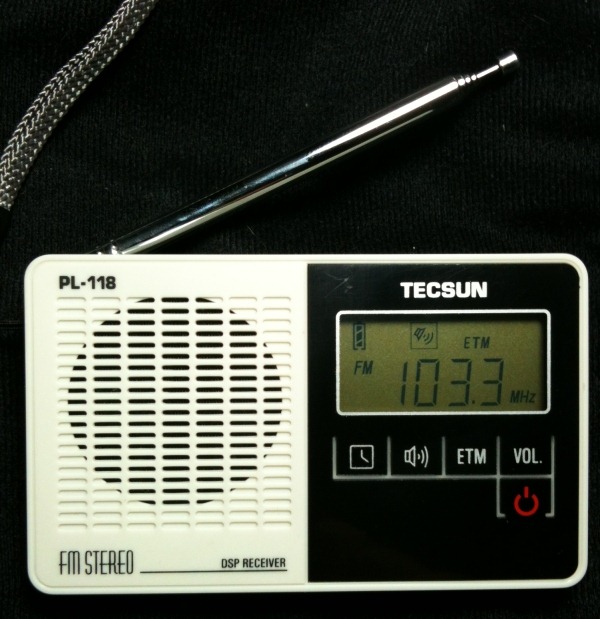
PL-118

This is a deceptively simple-looking radio. In addition to what you see here, the only other control is a single thumbwheel knob. Nevertheless, this is a fully-functional clock radio with sleep timer and scanning memory. The DSP on the front refers to the digital signal processing chip that basically does the work in this receiver.

Maybe the best approach is to explain the controls. With so few controls, they have to do double duty. The button that looks like a clock face can be pressed and held to enter time setting mode for the hours, minutes and 12/24 hour mode. Hold the button down a second or so to enter time setting mode; set the hour with the thumbwheel. Press the button again to set minutes and again to set 12/24 set mode. When the radio is on, this button briefly displays the time in place of the frequency. The next button that looks like a speaker and sound waves is the alarm set and off/on. Press the button briefly to turn the alarm off and on. Hold it down to enter time setting mode. When the alarm is on, an icon appears in the display as you see in the picture above.

The ETM (Easy Tuning Mode) switches tuning modes. In normal mode, turning the thumbwheel tunes the radio. Pressing ETM switches the receiver to tune by what is stored in the memories and the thumbwheel runs through the memories. A long press of the ETM button initiates a scan of the FM band, loading up all the stations into memory. This feature is similar to many television sets that scan the channels once when the TV is first turned on and thereafter you only see the active ones.

Pressing the VOL. button switches the thumbwheel from tuning to volume with a digital volume level displayed while you set it. The power switch turns the radio off and on. Also, holding it down engages sleep timer setting (the sleep time value is set by turning the thumbwheel). A battery status indicator displays all the time.

In practice, the radio was quite sensitive and I was able to receive 33 stations nicely. The internal speaker was crisp and ok to listen to for voice. For music, the internal speaker isn’t pleasant to listen to. With a good set of headphones, music was very nice, but lacking in the low bass tones.

If you look to the left of the TECSUN logo in the photo above, you’ll see a scratch. That’s my only real problem with this radio. It’s going to scratch easily and not look so cool in time. The buttons, which are integral with the front panel will likely show wear quickly as well.

As for the manual, you are reading the only one I know of. Nothing came with the radio.

Update: I have now found an English manual that covers most of what is in this article.
Posted in Product Reviews, Radio, Technology | Tagged , , | 5 Comments

Tecsun R-912 product review

I’ve previously reviewed the Tecsun R-912. Here is the “official compilation” of features that I’m using now for my reviews.

Model Tecsun R-912
Frequency coverage FM 87 – 108 MHz
AM 525 – 1610 KHz
SW1 3.55 – 4.0 MHz
SW2 4.7 – 5.25 MHz
SW3 5.9 – 6.3 MHz
SW4 6.95 – 7.4 MHz
SW5 11.55 – 12 MHz
SW6 13.3 – 13.9 MHz
SW7 15.0 – 15.6 MHz
SW8 17.4 – 18.05 MHz
SW9 21.35 – 21.9 MHz
FM Stereo Yes (earphones)
Sensitivity FM 10 μV
AM 1 mV/m
SW 50 μV
SSB No
Technology Single conversion
Battery 2 AA
External DC 3v Center (-)
External antenna jack No
Tuning Analog
Display Digital
Volume Analog
Signal strength indicator Yes
Whip antenna length 19”
Local/Distance switch No
Bandwidth switch No
Tone control No
Dial light No
Clock No
On/off Slide switch
Control lock No
Attached battery door No
Size 4 5/8” x 3” x 1 1/16”
Weight without batteries 5.9 oz.
Carrying Wrist strap
Accessories included Ear buds, external antenna, pouch
Price (including shipping) $22.55 (eBay)
Posted in Product Reviews, Radio, Technology | Tagged , | Leave a comment

An unexpected radio store

Want to buy a shortwave radio? There are several stores. I buy most of mine on eBay. Amazon.com can be a good place. Radio Shack carries a few and you can sometimes get a good deal on a clearance item. Serious shortwave users talk about Universal Radio.

Today I stumbled upon an unexpected source, one that has generally competitive pricing and a few good radios: the NPR Shop. National Public Radio (NPR) sells merchandise to raise funds to support the organization. Naturally folks who listen to NPR are at least somewhat interested in radio, so it makes sense. There are shortwave radios from Grundig/Eton and C Crane. They have some Sangean and Tivoli models, but none with shortwave. I found prices about the same as Amazon.com, with the notable exception of a stunning Grundig S350DL NPR special limited edition well below Amazon’s price and with stereo headphones thrown in to boot.

Posted in Radio, Technology | Tagged , | Leave a comment

Receiving SSB on a radio without a BFO

Single sideband transmission is a way to transmit radio signals more efficiently. It’s used by amateur radio operators and commercial services. Most of the crop of moderately-priced shortwave receivers can’t receive SSB transmissions, making them sound like Donald Duck. More expensive receivers have a feature known as a beat frequency oscillator (BFO) to allow SSB to be heard normally.

All that’s needed to make it work is another carrier wave signal from another source. I happen to have an RF signal generator that I built from a kit in the 1960’s. Remarkably, it still works and all I have to do is tune next to the SSB transmission frequency I want to receive, placing the radio near the generator, and voilà, SSB reception. Tuning is rather tricky but possible. Maybe I can modify the unit to add a fine tuning control.

The generator is also useful in locating a very weak station on a radio with a rough analog tuning dial. I tune the station with a digital radio, tune the signal generator to be heard on the same frequency, and then tune the clear strong signal generator signal on the analog radio. Sometimes, it’s the only way to see if a station can be heard on one of these analog radios.

An alternative is a dedicated external BFO running near the IF frequency of the radio, 455 KHz (where I should have tuned the signal generator when I tried it). TenTec makes a kit for $11 and I have one on order. I should be able to put it in a small case and carry it around in my radio bag. I built kits when I was a teenager, even a 4-band tube type shortwave receiver (a Lafayette KT-340). This should be a piece of cake.

Posted in Technology | Tagged , , , | Leave a comment

One better: Tecsun R-912 radio

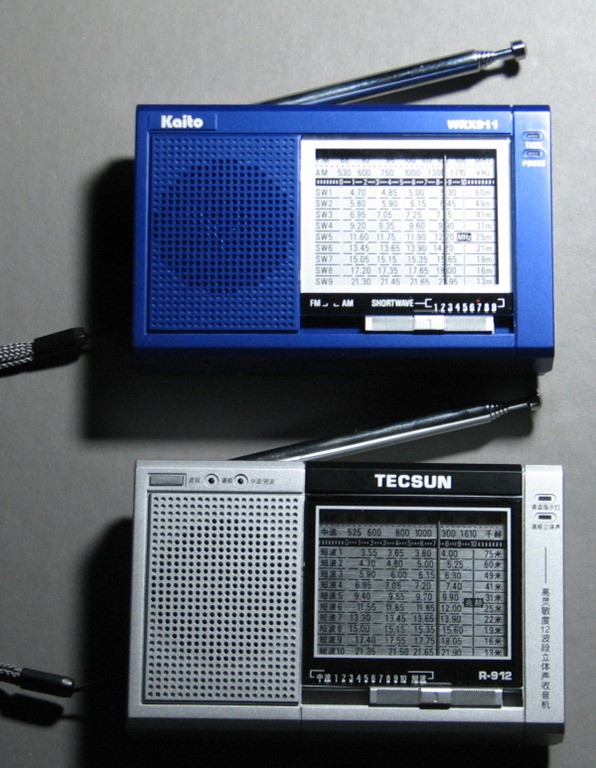
One of the top-rated budget ultralight shortwave radios is the Kaito WRX911 (also known as the Tecsun R-911). I have the Kaito-labeled version and it’s a respectable little radio. Add one to 911 and you get 912, inviting an obvious comparison to the Tecsun R-912 model that waltzed in today. My new radio was the Chinese version (there is also an English version).

Plus1

I was immediately struck by the similarity. Both cases are the same size and shape; the back could have been made by the same mold. Both have an identical 19” whip antenna and identical controls on the sides (volume, tuning, on-off) and jacks, 3v DC and earphone. Indeed, the only visible differences are the presence of extra button and two lights in the upper left corner of the Tecsun. The 911 switches all bands, including FM using the single band switch, while the 912 switches between FM and AM using the button, and notes which one is selected with the light (FM is the red light on the left).

There are two less-obvious differences that leads to the “one better” in this article’s title. First the second LED indicator upper right means something different on the two radios. On both radios the top light is a tuning/signal strength indicator. On the 911 the lower light just means “on” but on the 912 it indicates “stereo” for FM. Stereo is activated and the stereo light only comes on when headphones are plugged in. On my 912, the tuning indicator is on solid for the whole FM band and only shows signal strength on AM (on the 911 the tuning indicator works on all bands).

The second “one better” is in the number of bands: the 911 has 11 and the 912 has 12 (cool how that works out with the model number). The additional band is 3.55 – 4.0 MHz.

As far as performance goes, I couldn’t really tell any difference. Some folks say the FM is better on the R-912. Given how weak signals fade in and out, a real A/B comparison is difficult. Both radios drift some (wander off frequency) further complicating comparisons receiving weak signals.

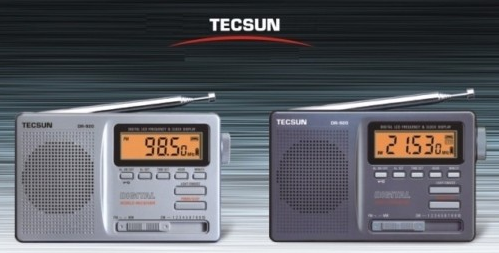
These are respectable radios and you should be able to pull in a number of stations. If you don’t need stereo, however, I’d pick something like the Tecsun DR-920 with digital readout available for about the same price.

Looking for the Tecsun R-912 schematic diagram? Here it is.

Posted in Product Reviews, Radio, Technology | Tagged , | Leave a comment

What’s the best shortwave radio under $50?

For what is being talked about as a dying hobby, shortwave radio is certainly blessed with a wealth of equipment to choose from. Here I’m going to talk about shortwave radios that can be purchased new on eBay, or Amazon or other online resellers. They may be out of production now, but are available. $50 includes shipping to the US.

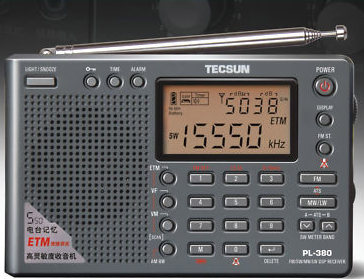
Right up front, I’m going to say that the best radio is the Tecsun PL-380. 1 I make this conclusion based my on my experience, product reviews, and even YouTube videos of the radio in action. It’s available now from sellers on eBay (Oct. 10, 2014) for $48 with free shipping. I also base my conclusion on a lot of other radios under $50 that I have used.

image

“Best” makes little sense without context. I’m going to assume that someone is looking to get into shortwave listening or that they are a casual listener looking to upgrade an old radio. I want to talk about features that make a radio fun to use and not frustrating, features that make it more likely that the radio won’t end up in a closet or a yard sale. If you want more details on the radios discussed, follow the hyperlinks.

Continue reading
Posted in Product Reviews, Radio, Technology | Tagged , , , | 9 Comments

The best shortwave receiver under $25?

My nomination for the best low-cost shortwave set is the Tecsun DR-920. It’s available from eBay sellers for around $17 and comes in gray and silver.

image

Right out of the box I noticed that the battery compartment door fit a little better than most of the low-priced radios I buy. The buttons and knobs are solid. The wrist strap is big enough. All in all, it seems well built and made a positive impression even before I turned it on.

After I turned it on, I was not disappointed. The tuning knob allowed precise tuning, with the frequency readout showing the exact setting. The display is to 5 KHz  on shortwave and 100 KHz on FM. The dial light wasn’t as bright as the photo, but it was adequate. I liked the fact that the dial light came on automatically while I tuned the radio (the light can also be turned on manually).

Reception was really outstanding for a radio of this class on all bands. I picked up CHU Canada on 7.850 MHz clearly (I’m in South Carolina) and reception wasn’t all that much better on my Grundig G4000A. I didn’t spend much time on AM, but I noticed that it picked up more stations that other small portables I have. FM performance was solid.

There are 10 shortwave bands (MHz):

  • 3.90 – 4.00
  • 4.75 – 5.06
  • 5.95 – 6.20
  • 7.10 – 7.30
  • 9.50 – 9.90
  • 11.65 – 12.05
  • 13.60 – 13.80
  • 15.10 – 15.60
  • 17.55 – 17.90
  • 21.45 – 21.85

The radio has one quirk. Pressing the power switch turns on the radio with the sleep timer activated, meaning it will turn off after the sleep setting expires. Maybe that is a good thing to save batteries. To turn the radio just plain on, you have to hold the power button down a couple of seconds.

Because this is a single-conversion receiver, it is prone to images — strong signals appearing on the dial on multiples of 455 kHz from the original signal. This can be confusing to hear a station on a frequency where it is not listed, nor actually broadcasting.

There is a lock button that keeps the radio from coming on accidentally, although the firm action of the power button makes accidental turn on unlikely. The radio operates on two AA batteries or an optional 3V DC adapter.

Things it lacks include: a signal strength indicator and FM stereo. The stereo version is sold by Eton as the G1100 for a much higher price tag. [The Et0n version of this radio is now selling on eBay right now for $12.99 including shipping.]

I have a lot of shortwave radios to choose from. I think this one is going traveling with me.

However, for $26 (if you’re lucky) you could get a Degen DE15 on eBay and it’s a better pick for its continuous digital tuning and stereo FM.

Update:

There is one more radio that’s come to my attention in the under $25 category: the Kchibo KK-D202. I’ve written a separate review of it. This radio has the disadvantage of all of the controls labeled in Chinese, and it’s AM performance is sucky. FM and Shortwave are, however, quite good, the radio is truly shirt-pocket size, it has a spiffy brushed aluminum face, a clock and station memories.

Posted in Product Reviews, Radio, Technology | Tagged , , | 2 Comments